Section 321 De Minimis in 2026: The Exemption Is Gone. What China-Direct Brands Pay Now
 By Bojan Dimov May 27, 2026 13 min read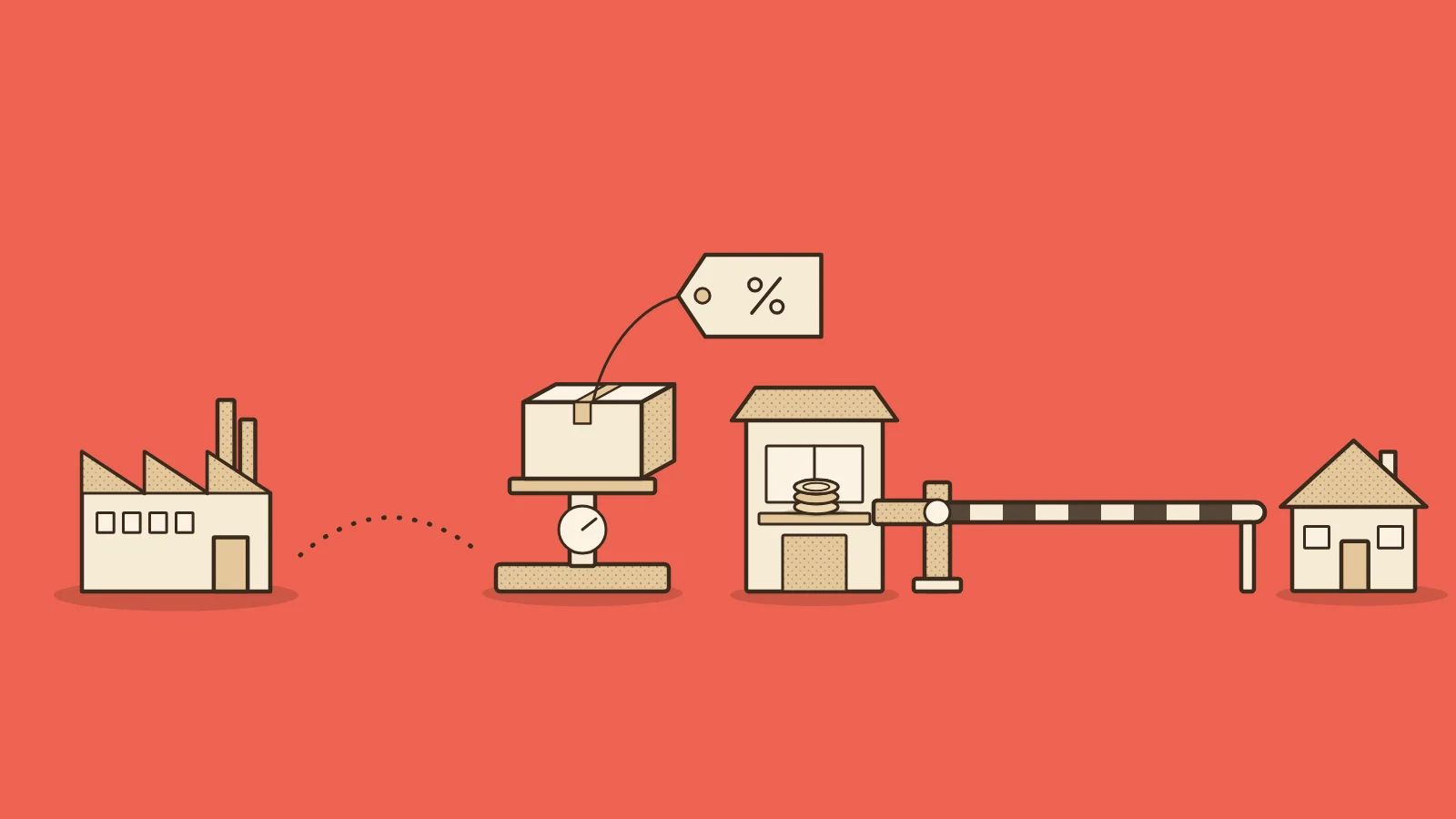
Section 321 de minimis no longer lets any parcel into the United States duty-free. The $800 exemption ended for goods from China and Hong Kong on 2 May 2025 and for every other country on 29 August 2025. CBP then wrote the suspension into its own regulations, for courier and express parcels from 24 June 2026 and for mail from 24 July 2026, and a 2025 statute repeals the exemption for commercial shipments from 1 July 2027. A parcel from China that lands today pays every duty that applies to its contents, whatever it is worth.
Much of what still ranks for this topic describes the old rules, and some of it still sells them. This guide sets out what applies on 29 September 2026: the timeline with primary sources, the duty stack on Chinese goods, how customs values a parcel sold to a US shopper, the deadlines still ahead, and what it all means for a store that ships from China.
How Section 321 de minimis ended: the timeline
The exemption was not switched off in one move. It was cut by country, then by channel, and the law behind it goes next summer.
| Date | What changed | Source |
|---|---|---|
| 2 May 2025 | Goods from China and Hong Kong lose de minimis treatment | CBP, CSMS 64917563 |
| 29 Aug 2025 | Suspended for goods from every country, by any mode of transport | CBP, CSMS 66065494 |
| 20 Feb 2026 | Supreme Court rules IEEPA does not authorise tariffs. The same day, an executive order keeps the de minimis suspension in force | Federal Register |
| 24 Jun 2026 | CBP rule: courier and express parcels of $800 or less need a formal or informal entry, indefinitely | Federal Register |
| 24 Jul 2026 | Mail pays all applicable duties under a new postal entry process. A new 12.5% Section 301 duty on products of China starts | Federal Register, USTR notice |
| 13 Aug 2026 | The Court of International Trade upholds the suspension | CIT, Slip Op. 26-94 |
| 22 Sep 2026 | CBP opens the Entry Type 13 test for mail | CBP, INT-057 |
| 22 Oct 2026 | Mail carrying Chapter 98 or 99 duties needs formal entry or Entry Type 13 | Federal Register |
| 1 Jul 2027 | The $800 exemption is repealed for commercial shipments, under a statute signed on 4 July 2025 | Public Law 119-21, sec. 70531 |
The February ruling is where most of the confusion starts. Learning Resources v. Trump ended the IEEPA tariffs that dominated 2025, and CBP stopped collecting them on 24 February 2026. It did not end de minimis. The ruling did not address the suspension, an executive order continued it the same day, and CBP has since rebuilt it on its own authority under 19 U.S.C. 1321(b), "to protect revenue, prevent unlawful importations". On 13 August 2026 the Court of International Trade upheld the suspension, holding that IEEPA "authorizes the President's rescission of the de minimis exemption". The 10% Section 122 surcharge that stood in for IEEPA lapsed on 24 July 2026.
If you imported goods as importer of record while the IEEPA tariffs applied, you may be owed money back. CBP is refunding IEEPA duties with interest through CAPE, a claim tool in its ACE portal. Only the importer of record or the broker that filed the entry can claim, and valid refunds generally arrive 60 to 90 days after CBP accepts the claim.
What Section 321 was, and why China-direct stores relied on it
Section 321 of the Tariff Act of 1930, codified at 19 U.S.C. 1321, let a shipment worth $800 or less, imported by one person on one day, enter free of duty and tax. Courier parcels cleared on a light data filing, Entry Type 86, and mail cleared with less. CBP counted more than 1.36 billion de minimis shipments in fiscal 2024, against 139 million in 2015.
For a China-direct store that gap was the model. A $30 order left a Shenzhen warehouse and arrived with no duty, while a brand importing a container paid duty on every unit at the port. The "Section 321 fulfillment" playbook, bulk stock into a Canadian or Mexican warehouse and single parcels across the border, ran on the same gap. CBP's suspension applies regardless of a shipment's "value, country of origin, mode of transportation, or method of entry", so every version of that playbook now pays duty.
Two narrow exemptions survive, and both outlast the 2027 repeal: genuine gifts of $100 or less sent from one person abroad to a person in the US, and personal articles carried by travellers. An order from a store is a sale, not a gift, and declaring it as one is a misdeclaration.
What a parcel from China pays in 2026
Duty on a Chinese-origin parcel is now built from the same layers as duty on a container. There are three rates, and they stack.
- The normal duty. The Column 1 General rate in the Harmonized Tariff Schedule for the product's 10-digit code. It is zero for many electronics and above 30% for some apparel.
- Section 301 list duty. 25% for products on Lists 1 to 3, 7.5% for List 4A, and nothing for products on no list.
- The new 12.5% Section 301 duty. Charged on products of China since 24 July 2026 under heading 9903.05.31, after one of 60 forced-labor investigations USTR closed in July. Goods under Section 232 tariffs are exempt, as is a list of products that includes computers, smartphones and chips.
Existing Section 301 exclusions do not help with the new layer. The 178 exclusions still in force waive only the list duty, and all of them expire after 9 November 2026.
Then come the fees. A courier or express entry pays a Merchandise Processing Fee. From 1 October 2026 it is $2.77 for an automated informal entry, or $1.38 per air waybill, paid by the carrier, for parcels cleared through an express consignment facility. Formal entries pay 0.3464% of value, at least $34.58 and at most $670.86. Mail entries are generally exempt. The broker or carrier that files the entry adds its own clearance charge, which varies and is not published in one place.
Here is the stack on three products China-direct stores sell every day, checked against the USITC tariff schedule, Revision 20, on 29 September 2026:
| Product | HTS code | Normal duty | Section 301 list | New Section 301 | Total | Duty on a $25 sale |
|---|---|---|---|---|---|---|
| Cotton knit T-shirt | 6109.10.00 | 16.5% | 7.5% (List 4A) | 12.5% | 36.5% | $9.13 |
| Base-metal necklace | 7117.19.90 | 11% | 7.5% (List 4A) | 12.5% | 31% | $7.75 |
| Plastic phone case | 3926.90.99 | 5.3% | 7.5% (List 4A) | 12.5% | 25.3% | $6.33 |
Classification moves the number more than most sellers expect. A polyester T-shirt falls under 6109.90.10, with a 32% normal rate against 16.5% for cotton, and a leather phone case leaves heading 3926 altogether. Check the 10-digit code for every SKU before you price it.
Two layers you may still see quoted are gone. IEEPA tariffs ended on 24 February 2026, and the Section 122 surcharge lapsed on 24 July 2026. A duty calculator or supplier quote that still adds either one is out of date.
The Drop
Five winning products every week. Real margins, real factories, ready to import.


How customs values a parcel sold to a US shopper
For a parcel shipped straight to a US customer, customs generally values the goods at what the customer paid for them. International shipping comes off only when it is charged separately and its actual cost is documented. Using a lower factory price instead needs proof that meets CBP's first-sale rules, which ordinary warehouse stock rarely has.
The rule is transaction value: "the price actually paid or payable for the merchandise when sold for exportation to the United States" (19 U.S.C. 1401a). A container's sale for export is the factory invoice. A parcel that leaves a China warehouse after your customer orders is exported on the strength of that order, and CBP has appraised online orders couriered to US buyers on those sales, at the retail price the customer paid (HQ H249150).
The exception is narrow. In December 2025 CBP accepted a $36.00 factory price instead of a $119.95 retail price for parcels shipped one order at a time, because each factory order named the US buyer and the goods could go nowhere else (HQ H353788). That ruling binds only the company that asked for it, and stock bought ahead of orders has no such link to a US buyer.
The gap matters. A cotton T-shirt with a $6 factory price that sells for $25 carries the 36.5% stack above. Imported in bulk, it pays about $2.19 a unit on the factory invoice. Shipped as a parcel and valued at the $25 sale, it pays about $9.13.
Declaring the factory price on a retail parcel does not close that gap. It is undervaluation, which carries penalties under 19 U.S.C. 1592, and the Justice Department's fraud division named "the undervaluation of imported goods designed to evade duties" among its priorities in August 2026. In September CBP also opened consultation on requiring foreign export documents, which "may show declared value", with comments due by 1 December 2026. Price the duty in instead.
Mail and express parcels now clear differently
Courier and express: informal entry replaces Entry Type 86
Courier and express parcels of $800 or less "must utilize formal or informal entry procedures", in the words of CBP's June rule. In practice that means an informal entry, Entry Type 11, for shipments worth up to $2,500 and a formal entry above that, with every duty, tax and fee paid. The owner, the purchaser or a licensed broker acting for them files it, often the carrier's own brokerage. Entry Type 86, the light filing that carried most de minimis parcels, is gone.
Who pays depends on the shipping terms. Shipped DDP, delivered duty paid, the seller is billed for the duty and fees and the buyer pays nothing on delivery. Shipped DDU, delivered duty unpaid, the US buyer is normally the importer, and the carrier either bills them or collects before handing over the parcel. FedEx, for one, makes the recipient responsible whenever the label names no payer.
Mail: a new postal process, and a harder deadline on 22 October
Parcels that travel through the international postal network follow their own process. Since 24 July 2026, mail pays all applicable duties. A bonded filer sends CBP entry data for each parcel, including its value and 10-digit tariff code, and pays through Pay.gov by the 7th of the month after arrival. Duties "will not be collected upon delivery of such shipments to addressees", and postal entries pay no processing fee.
The next change lands on 22 October 2026. From that date, formal entry is required for "any merchandise subject to duties under Chapter 98 or Chapter 99" of the tariff schedule, unless the filer uses CBP's Entry Type 13 test, a voluntary electronic entry for mail worth $2,500 or less that opened on 22 September. Section 301 duties, including the new 12.5%, are charged under Chapter 99, so almost every Chinese-origin parcel sent by mail moves off the simple postal process that day. Entry Type 13 requires the sender's name and address and the foreign postal tracking number for every parcel.
Mistakes brands are still making
- Quoting dead tariffs. IEEPA duties and the Section 122 surcharge no longer apply. A landed-cost figure that includes them overstates duty, and one that ignores the 12.5% Section 301 duty understates it.
- Declaring the factory price. A parcel's customs value generally follows the sale to your customer, not your purchase from the factory. Underdeclaring is a violation, not a saving.
- Burying freight in the product price. Only international shipping that is charged separately and documented comes off the customs value. With free shipping and no freight records, the whole sale price is dutiable.
- Splitting orders to stay under $800. There is no $800 line left to stay under. The threshold that matters now is $2,500, where an informal entry becomes a formal one.
- Counting on a Section 301 exclusion. Exclusions waive only the list duty, never the 12.5%, and all 178 expire after 9 November 2026.
- Leaving duty to the customer without saying so. A shopper who meets an unexpected bill at the door refuses the parcel or files a chargeback. Decide who pays and put it in your shipping policy.
- Ignoring 22 October. If your products travel by mail, ask your provider now how Chinese-origin parcels will clear after that date.
- Assuming Europe is still duty-free. The EU ended its €150 duty exemption on 1 July 2026 and now charges a flat €3 per item category. The detail is in our EU de minimis breakdown.
What it changes for a China-direct store
Duty is now a line on every US order, and it is generally charged on what your customer paid for the goods. That changes which products belong on a China-direct lane and how you price them. It does not remove the reasons brands ship from the source.
Where China-direct still wins
- Duty only on what sells. A container pays duty at the port on every unit, including the ones that never sell. A parcel pays only when an order exists.
- No cash ahead of sales. No production run prepaid against a forecast, no ocean freight, and no receiving or monthly storage in a US warehouse.
- Testing and the long tail. A new product can go live without a container behind it, and slow sellers never sit in paid storage.
- One stock, many markets. The same warehouse ships to the US and to 65+ other countries, so a US duty change does not strand your inventory.
Where a US warehouse can come out ahead
- Proven, high-volume products with a large retail markup. Bulk entry pays duty on the factory price, so the gap grows with the markup.
- Products sold on a next-day promise, which a cross-border lane cannot match.
- Heavy or bulky goods, where cross-border parcel rates punish the weight.
Many brands will run both: new and long-tail products shipped from China, and proven winners moved into US stock once the numbers justify a container. The full cost comparison, with storage and last-mile included, is in our 3PL pricing guide, and the cash side of holding stock is in dropshipping cash flow. For the wider Q4 picture, including freight and carrier surcharges, see how brands are preparing for Q4 2026.
How Peregrine fits
Duty is the same law for every seller, so the difference a fulfillment partner makes is everything around it. At Peregrine, sourcing, warehousing, dispatch, customs and last-mile run as one stack from Shenzhen. Goods are bought at factory price with 0% markup, against the 30% to 60% agents typically add. Orders dispatch in under 24 hours on average, and dispatch plus transit to the US averages 6.6 days.
Want the numbers for your own product? Get a sourcing quote with the factory price, or see pricing for the plans.
Rewritten in full on 29 September 2026. An earlier version of this post, first published in May 2026, described the exemption as still available.
Last reviewed 29 September 2026.
Frequently asked questions
Is Section 321 still in effect in 2026?
No. The $800 de minimis exemption has been suspended for goods from every country since 29 August 2025, and for goods from China and Hong Kong since 2 May 2025. CBP made the suspension indefinite by regulation in June and July 2026, a federal trade court upheld it in August, and a statute ends it for commercial shipments on 1 July 2027.
Do parcels under $800 from China pay duty now?
Yes. Every parcel pays all applicable duties, taxes and fees whatever its value. For most Chinese goods that means the normal tariff rate plus any Section 301 list duty plus the 12.5% Section 301 duty in force since 24 July 2026, and courier entries also pay a processing fee.
Is US duty charged on the retail price or the product cost?
For a parcel shipped straight to a US customer, customs generally values the goods at what the customer paid, minus international shipping that is charged separately and documented. A lower supplier price can be used only with proof that meets CBP's first-sale rules.
What replaced Entry Type 86?
Courier and express parcels now clear on an informal entry, Entry Type 11, for shipments up to $2,500, or a formal entry above that. Mail uses a separate postal entry process, and from 22 October 2026 mail carrying Section 301 duties needs formal entry or CBP's Entry Type 13 test, which opened on 22 September.
Can I avoid duty by shipping from Canada, Mexico or another country?
No. The suspension applies whatever the shipment's value, origin, mode of transport or method of entry, so a parcel sent from a Canadian or Mexican warehouse pays duty like one sent from China. Goods made in China also keep their Chinese origin, and the Section 301 duties that come with it.
What duty rate applies to goods from China in 2026?
It depends on the product's 10-digit HTS code. Add the normal rate, any Section 301 list duty of 25% or 7.5%, and the 12.5% Section 301 duty in force since 24 July 2026. IEEPA tariffs ended in February 2026 and the 10% Section 122 surcharge lapsed in July.
Who pays the duty on a China-direct order?
It depends on the shipping terms. Shipped DDP, the seller pays the duty and fees and the buyer pays nothing on delivery. Shipped DDU, the US buyer is normally the importer, and the carrier bills them or collects before handing over the parcel. On mail, a bonded filer pays CBP monthly and nothing is collected at the door.
Can I get back the IEEPA tariffs I paid?
Possibly, if you were the importer of record. CBP refunds IEEPA duties with interest through CAPE, a claim tool in its ACE portal. Only the importer of record or the customs broker that filed the entry can claim, and valid refunds generally arrive 60 to 90 days after CBP accepts the claim.
Does the gift exemption still apply?
Yes, but only to genuine gifts of $100 or less sent from a person abroad to a person in the US, and it survives the 2027 repeal. A store order is a sale, so it pays duty like any other import.
Is a US warehouse cheaper than shipping from China now?
It depends on the product. Bulk imports pay duty on the factory price but prepay production, freight and storage before anything sells. China-direct parcels generally pay duty on the sale price, but only when an order exists. High-volume products with big markups often favour US stock, while new and long-tail products favour shipping from China.
The EU €2 Handling Fee Is Set for 1 November 2026: What It Adds to Every Order From China
The EU's new €2 handling fee is due from 1 November 2026, on top of the €3 duty. Who pays it, how it is counted, and what it adds to a real order shipped from China.
Holiday Returns 2026: Handling the January Wave When Your Product Ships From China
Retailers expect 17% of holiday sales to come back, mostly in January. How to handle holiday returns when shipping back to China costs more than the product.
Batteries, Liquids and Cosmetics: What You Can Actually Ship From China (and How)
Batteries, liquids and cosmetics are rarely banned. They are misrouted. The IATA rules, the FDA and EU cosmetics files, and the lanes that carry them.
The Drop
Five winning products every week. Real margins, real factories, ready to import.