What a QC Photo Check Actually Catches: Inside a Shenzhen Inspection
 By Bojan Dimov August 6, 2026 11 min read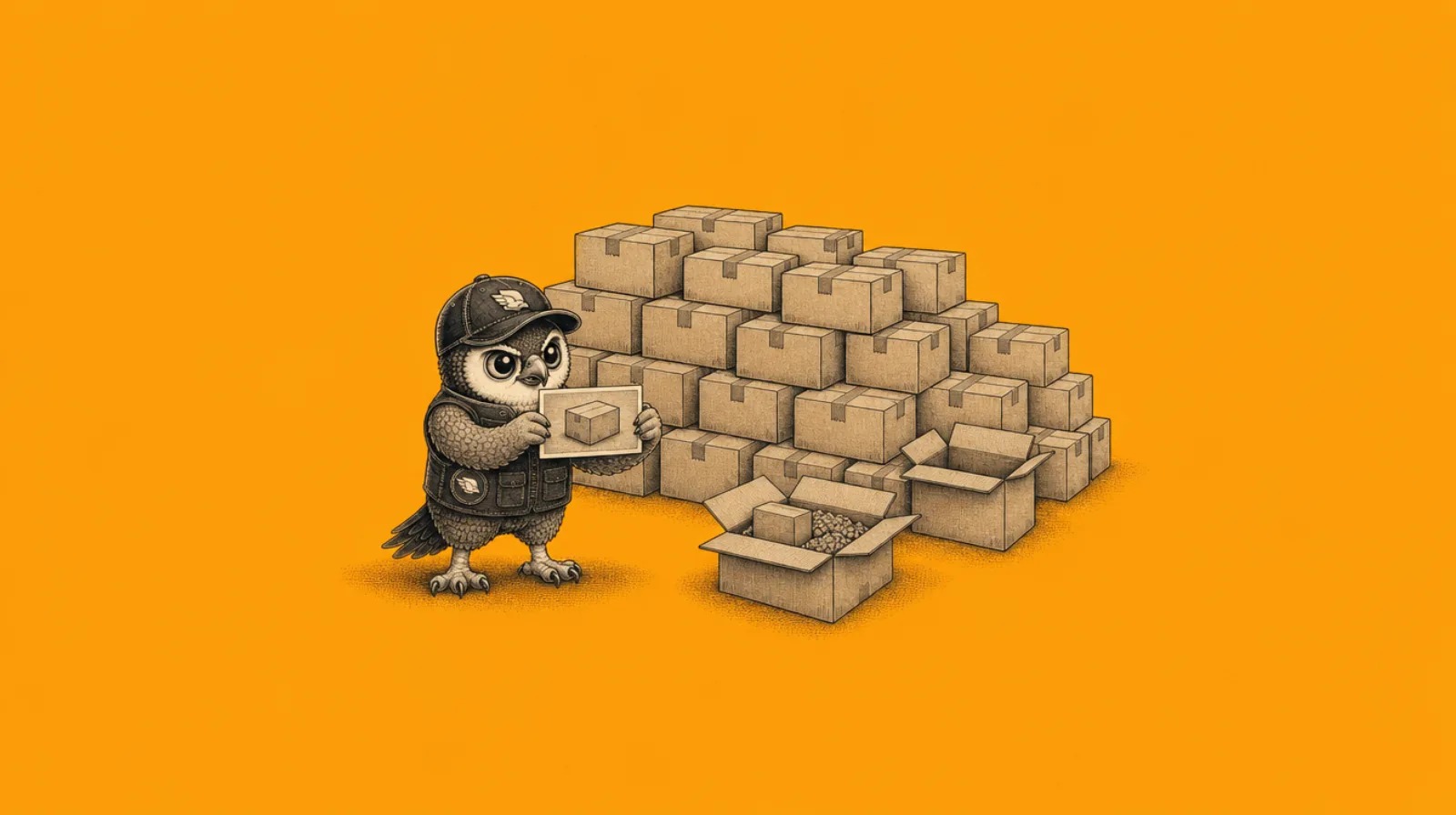
Dropshipping quality control is statistical, not total. On a 4,000-unit lot at the default General Inspection Level II, an inspector opens 200 units and rejects the batch at 11 major defects. The other 3,800 units are never touched. A photo proves one unit existed and looked right. It does not prove the lot did.
I moved to Shenzhen in 2023 and have watched this run from our own warehouse floor. Below is the sequence, what each step catches, and the four failures no photo check will ever find. The limits matter more than the wins, because the limits are where sellers get hurt.
A photo of the product is not a photo of your unit
Three photos look like proof. Only one is.
The listing photo is a render of the product line: what the supplier wants it to look like. The sample photo is the unit hand-finished by a senior worker who knew a buyer was watching: the factory on its best day. The pile photo, cartons stacked with a dated sheet on top, shows a quantity of something exists somewhere. None of them is the unit going into your customer's box.
What you want is boring: a unit pulled from your lot, variant markings visible, in the retail packaging it will ship in, with something in frame tying it to your production run and date. Not glamorous. Auditable, which is the only quality a QC photo needs.
Photo three is what an unaccountable middleman sends when you ask "is it ready." The factory versus trading company cost math explains why that changes who stands next to the goods.
The inspection, in the order it actually happens
A pre shipment inspection has a precondition most sellers miss. It does not start when the factory says the goods are ready, it starts when the order is finished and export-packed: the trigger is at least 80% produced and packed, and QIMA applies the same threshold. Earlier and you inspect an unfinished lot. Later and the container is already loaded. The sequence:
1. Count before opening anything. Cartons reconciled against the purchase order. This catches the most common dispute in China sourcing: not a bad product, 4,000 units billed and 3,720 present.
2. Pull the sample properly. Cartons selected across the pallet stack, not the three on top nearest the door. Top-layer sampling is the easiest way for a factory to pass an inspection it should have failed.
3. Match the variant to the order. Next section. It does the most damage.
4. Workmanship and visual. QIMA's inspectors look for blemishes in finishes, cracks, sharp edges, colour inconsistency, stains, chips, or holes, then classify each finding critical, major or minor. This is what people picture when they say QC. About a third of the real work.
5. Function test what can be function tested. Power it on, run it for the specified duration, check the charge port accepts the cable in the box. A function test is only as good as the pass or fail line you wrote beforehand, which most sellers never write.
6. Accessories and completeness. Every item the listing promises has to be in the retail box: cable, spare gasket, wall anchors, warranty card. Customers do not report a missing accessory as "incomplete." They report it as "broken."
7. The carton, labelling and barcode. Covered below.
8. Report. Pass or fail, defect counts by class, and photographs, delivered same day.
The core checks, and what each cannot prove:
| Step | Catches | Cannot prove |
|---|---|---|
| Carton count | Short shipments, mixed SKUs per carton | Anything about the contents |
| Variant match | Wrong colour, size, plug, manual language | That the variant is the one that sells |
| Workmanship | Scratches, cracks, sharp edges, colour drift | Anything below the surface |
| Function test | Dead on arrival, wrong voltage behaviour | Lifespan, cycle count, durability |
Variant matching: the checks that kill the most orders
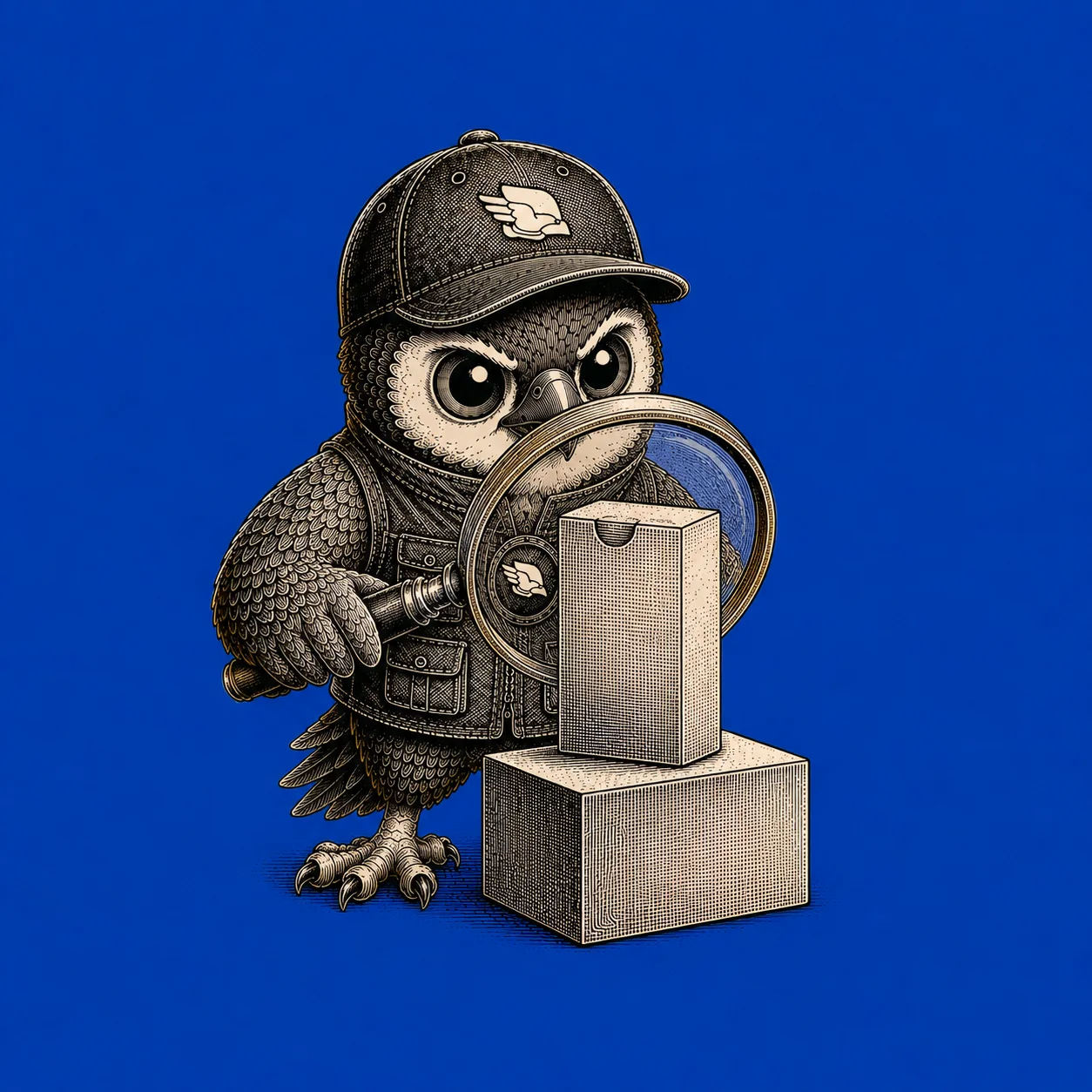
If you fix one thing, fix this. Workmanship defects are visible and get caught. Variant errors are invisible in a photo unless someone knows what to compare against, and they produce a 100% return rate on every affected unit. The customer did not get a worse version of what they ordered. They got the wrong thing.
Colour and size. "Charcoal" and "graphite" are the same word in most factory conversations, and sizing conventions differ by market. Both need a physical reference agreed before the purchase order.
Plug type and voltage. Pure destination logic, knowable in advance. A unit built for the US on 120 V at 60 Hz does not work in the UK on 230 V at 50 Hz.
| Destination | Plug type | Voltage | Frequency |
|---|---|---|---|
| United States | A / B | 120 V | 60 Hz |
| United Kingdom | G | 230 V | 50 Hz |
| Germany | C / F | 230 V | 50 Hz |
| France | C / E | 230 V | 50 Hz |
| Australia | I | 230 V | 50 Hz |
| Japan | A / B | 100 V | 50 Hz / 60 Hz |
Source: World Standards.
The language of the manual. Not a nicety in the EU, it is law. Under the General Product Safety Regulation, applicable since 13 December 2024, manufacturers must ensure a product is accompanied by clear instructions and safety information "in a language which can be easily understood by consumers, as determined by the Member State" (Article 9(7)). The same regulation requires a responsible economic operator established in the EU. An English-only leaflet in a box bound for Germany is a compliance defect, and the check that catches it is a photo of the actual insert, in the actual box, before dispatch. More on the paperwork in EU de minimis and dropshipping in Europe.
Variant matching starts upstream at sourcing. QC cannot fix a spec that was never precise enough to check against.
The Drop
Five winning products every week. Real margins, real factories, ready to import.
The box is part of the product
Sellers spend months on the unboxing experience and no time on whether the carton survives a truck.
The carton drop test follows ISTA 1A, and it is harsher than people expect. A packed carton is dropped 10 times: once on its most fragile corner, three times on different edges, six times on different faces. Height is set by weight, and the lighter the carton the higher the drop: 30 inches under 21 lbs, 24 inches from 21 to 40 lbs, 18 inches from 41 to 60 lbs. It fails if the carton or inner packages are damaged, if products show scratches or dents, or if products stop working.
Why that matters for a China-direct brand: a drop test on the export carton tells you about the pallet, not about the single mailer going to one customer's door. If you ship parcels individually, and we do, the packaging that needs testing is the retail unit box and the mailer. Different test brief, and you have to ask for it. Same logic on custom packaging, where a printed rigid box can photograph beautifully and arrive crushed if the board grade is wrong for the route.
Labelling and barcode. The least glamorous check, and the highest value. QIMA lists the barcode failures that show up at receiving: low contrast, too close to the edge, a creased sticker, or a code too large or too small to scan, plus the carton markings required: purchaser name, PO number, item count, dimensions and weight, warnings, storage instructions and barcodes. Cheap to fix in Shenzhen, expensive at destination.
AQL: why inspection is statistical, not total
Here is the part nobody selling QC likes to say out loud.
Almost all pre shipment inspection in China runs on acceptance sampling under ANSI/ASQC Z1.4, the US publication of ISO 2859-1. You pick a lot size and an inspection level; the table returns a code letter, which gives the units to open and the defect count at which you reject.
| Input | Value |
|---|---|
| Lot size | 4,000 units |
| Inspection level | General Level II (the default) |
| Sample size code letter | L |
| Units actually opened | 200 |
| Major defects: accept / reject at AQL 2.5 | 10 accept / 11 reject |
| Minor defects: accept / reject at AQL 4.0 | 14 accept / 15 reject |
| Units nobody ever touched | 3,800 |
Sample size and accept/reject points per QIMA's AQL tables.
Read that twice. On a passing inspection, up to 10 units in the opened sample can carry major defects and the batch still ships. And 95% of the lot was never opened.
The sample does not scale with the lot either. At Level II, a 5,000-piece order requires 200 samples and a 40,000-piece order requires 500. The order grew eight times, the inspection two and a half.
One more thing: the standard does not define what counts as a critical, major or minor defect. ISO 2859-1 gives you the maths, not the defect list. Convention is AQL 0 for critical (safety or regulatory), 2.5 for major (affects function or would likely cause a return), 4.0 for minor (cosmetic). Which flaw sits in which bucket is your decision, written before the inspection, or it is the inspector's guess.
What a 99.6% QC pass rate does and does not mean
We publish a 99.6% QC pass rate. Being exact about it matters, because a vague version would be worth more to our marketing and less to you.
What it means: of the units our team inspected against the client's specification, 99.6% passed. It covers the checks above, at our own Shenzhen warehouse before dispatch.
What it does not mean: it is not a claim that 99.6% of every unit a factory has produced is flawless. It is not a delivery guarantee, which is a separate number, our 99.8% delivery accuracy. It is not a promise about lifespan. And it does not escape the section above: a pass says the sample gave no evidence the lot is worse than your agreed threshold.
When a supplier fails, do not re-inspect at the same intensity and hope. Severity moves from normal to tightened when results across consecutive lots suggest the process average might be poorer than the AQL: a tighter acceptance criterion, until normal severity is earned back. A supplier who fails twice in five shipments should not be treated like one who never has.
What a photo check cannot catch
Four categories of failure will never be found by a photo QC check. Plan around them.
1. Latent defects. A battery that holds charge today and degrades in 40 cycles. An adhesive that lets go in a hot delivery van. A coating that fails after 30 washes. All of them photograph perfectly. Time is the test, and the inspection does not have time.
2. Anything requiring destructive testing. Tensile strength, seam burst, flammability. You cannot ship the unit you destroyed, which is why the standard carries special inspection levels S-1 through S-4 with much smaller samples, used for destructive or expensive testing. A claim only destructive testing supports needs a lab test on a paid sample, budgeted separately.
3. Batch drift. Approved sample and delivered bulk can differ in ways no single inspection catches, especially when a factory substitutes a material grade mid-run to protect its margin. The photographed unit can be genuinely good and the run can still have drifted. Full treatment in sample to bulk quality drift.
4. The units nobody opened. On a 4,000-unit lot, 3,800 ship on the strength of 200. Good trade. Still a trade.
A fifth, from experience: a photo cannot verify a document. A photographed CE mark tells you a mark was printed, not that a test report exists. Compliance is a separate paperwork check.
What this is worth in returns money
Returns are the meter that tells you whether QC is working, and it is expensive. The National Retail Federation, with Happy Returns, put 2025 US retail returns at $849.9 billion, 15.8% of sales, with online returns at 19.3%. The same report found 9% of all returns are fraudulent.
Only part of that is defect-driven, and that part you control. For a China-direct brand it costs more than for a domestic seller, because sending a $20 item back to Shenzhen costs more than the item. A defective unit means a refund plus a replacement shipped, not a restock.
Illustrative example. Made-up store numbers to show the arithmetic, not Peregrine data.
| Line | Before tightened QC | After tightened QC |
|---|---|---|
| Orders per month | 1,000 | 1,000 |
| Average order value | $45 | $45 |
| Defect-driven refunds and replacements | 3.0% (30 orders) | 1.0% (10 orders) |
| Cost per incident (refund plus replacement landed cost) | $63 | $63 |
| Monthly cost | $1,890 | $630 |
| Monthly difference | $1,260 |
Two points of defect-driven return rate is $15,120 a year. That is the budget question QC answers. Run your numbers in the dropshipping profit calculator; the playbook for pulling the rate down is how we cut returns from 8% to 2%.
How to brief a QC check so it actually catches things
Most QC checks underperform because the brief was thin, not because the inspector was lazy. Six things to put in writing before the purchase order:
- The physical reference. An approved golden sample held in the warehouse. Colour codes in an email are not a reference.
- Your defect classification. Which flaws are critical, major and minor for your product. The standard will not do it for you.
- The AQL and inspection level. General Level II, AQL 2.5 major and 4.0 minor is the common default. Say it explicitly.
- The function test and its pass or fail line. What gets operated, for how long, and what "working" means in a measurable way.
- The photo set. Front, back, variant marking, label, the manual page showing language, the open retail box with accessories, the sealed carton.
- The reject photos, not just the pass ones. A clean pass with zero defect photos on a 200-unit sample is worth a question.
We run this in-house because inspection happens in our own Shenzhen warehouse between goods-in and dispatch, on the same floor where the parcel gets packed and sent inside 24 hours. A failed unit gets pulled rather than shipped while an email thread resolves. None of that changes the maths in section five. Inspection is still statistical. We run it against your spec, with photos on the order, and tighten severity when a supplier earns it. Start here.
Frequently asked questions
What does a QC photo check actually prove?
It proves a specific unit from your lot existed and matched your specification, including variant details like colour, size, plug type and manual language. It proves nothing about the units that were not opened, and cannot show latent defects, durability or compliance documentation.
What is AQL sampling in a China product inspection?
AQL sampling is the acceptance sampling method in ISO 2859-1, published in the US as ANSI/ASQ Z1.4. You choose a lot size and inspection level, and the tables return a sample size and accept/reject numbers. For a 4,000-unit lot at General Inspection Level II, that is 200 units: 10 major defects accepted, 11 rejects the batch at AQL 2.5.
What is a pre shipment inspection and when does it happen?
It is the final check on goods before they leave the supplier, run once at least 80% of the order is produced and export-packed, so the inspector sees the goods as they will ship. It covers quantity, variant conformity, workmanship, function tests, packaging and labelling, and ends in a pass or fail report with photographs.
What can a QC check on a China supplier never catch?
Four things: latent defects that only appear over time, such as battery degradation or adhesive failure; anything needing destructive testing, like tensile or burst strength; batch drift, where bulk diverges from the approved sample; and any defect in the units nobody opened, 3,800 of them on a 4,000-unit lot.
Does a 99.6% QC pass rate mean 99.6% of units are perfect?
No. Peregrine's 99.6% QC pass rate is the share of inspected units that passed our checks against the client's specification. It is not a claim about every unit a factory has produced, not a durability guarantee, and not the same as our 99.8% delivery accuracy. Sampling shows a lot is not worse than an agreed threshold, not that every unit is good.
Q4 Peak Season From China: The Cutoff Dates That Decide Your Black Friday
Black Friday is 27 November 2026. Golden Week closes China 1 to 7 October and 11.11 eats capacity from 21 October. Here is the working backwards calendar.
The Chargeback Math of Slow Shipping: What Every Dispute Actually Costs You
A lost item-not-received dispute costs far more than the refund: $15 to receive it, $15 to fight it, plus goods, postage and ratio risk. Here is the real math.
The Cash-Flow Math of Dropshipping vs Holding Inventory: Real Numbers per Order
Holding inventory locks $10,000+ for months and burns 20 to 30 percent of its value a year. The per-order model funds each unit with the customer’s money. The side-by-side math, per order and per quarter.
The Drop
Five winning products every week. Real margins, real factories, ready to import.