Sample-to-Bulk Quality Drift: Why Order One Is Perfect and Order Three Is Not
 By Bojan Dimov August 8, 2026 11 min read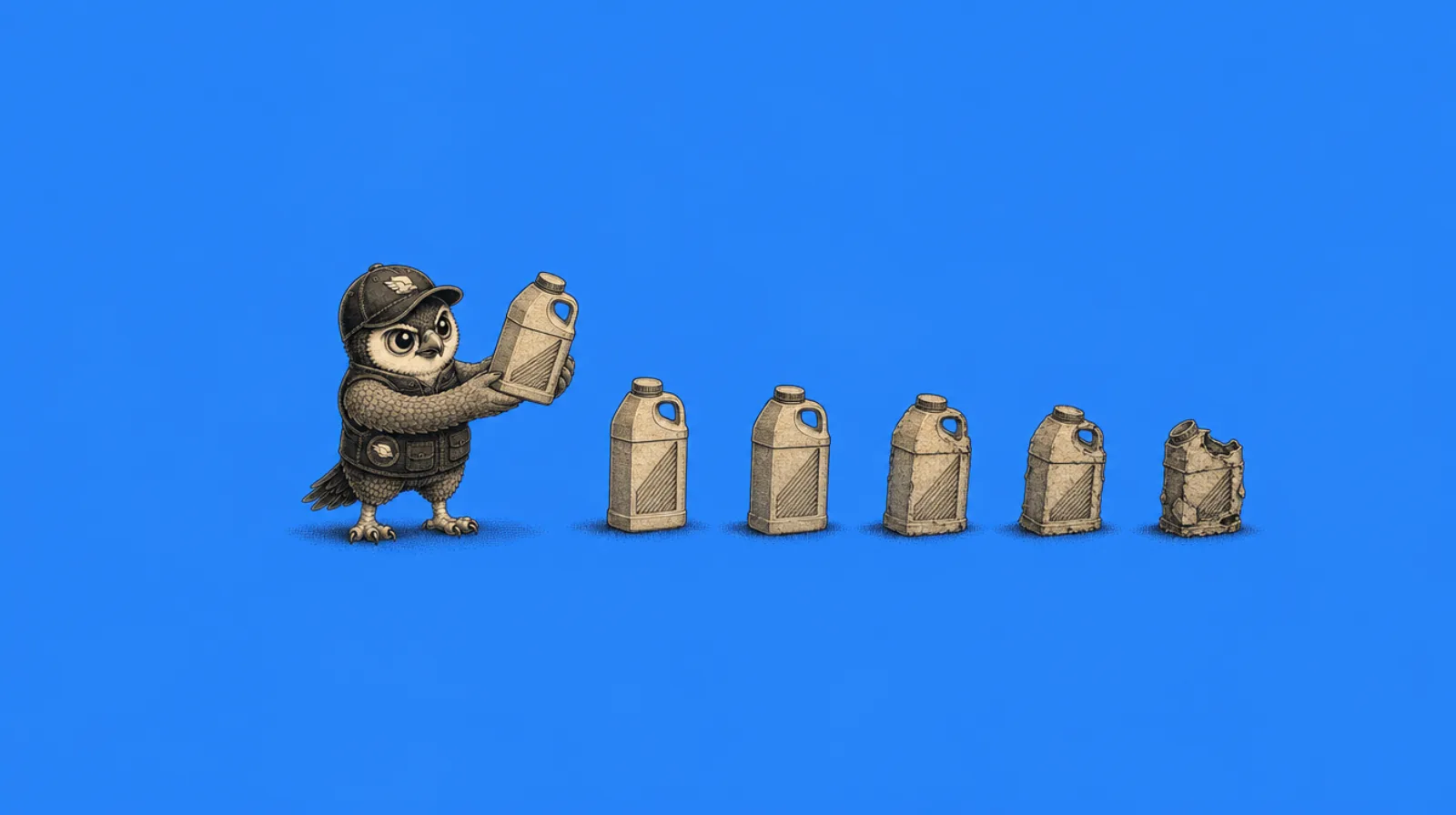
Sample vs bulk order quality diverges for mechanical reasons more often than dishonest ones. Your sample was hand-finished by one senior operator with no deadline. Bulk runs on a line. The standard defence, ISO 2859-1 AQL sampling, assumes this and switches you to tightened inspection once 2 of 5 consecutive lots are rejected. Drift shows on run two or three.
That last point costs money. Sellers inspect run one, watch it pass, and stop paying for inspections. Drift then arrives on the run after the one they watched.
Drift is a process problem, not a character problem
Two things get proven at different times, and most sellers only pay for the first.
A sample proves the design is possible: a unit in this material, with this finish, can exist. It says nothing about whether five thousand can exist at line rate. Jiga puts it plainly: a working prototype proves a product can function, not that it can be manufactured reliably, repeatedly, and profitably at the required scale. Prototypes use hand-fitting and ad hoc components that vanish once real tooling is cut.
Process validation is the second thing, and it decides what lands in your customer's box. HIL Electronic's pilot run guide gives the arithmetic: a defect that occurs once in 3 prototype boards may occur ten times in 30 pilot boards, a rate invisible at sample quantity and disqualifying at volume.
So you did not buy a bad sample from a bad factory. You bought one that was never statistically capable of predicting anything. Now the mechanisms, honest ones first, because they are the majority. For the inspection side, the QC photo check walkthrough covers what a check catches and what it never will.
Five honest reasons run three is worse than your sample
1. The sample was built under conditions that will never repeat. One senior worker, no line rate, no shift target, full knowledge a buyer was watching. Not fraud. Also nothing like Tuesday afternoon in week three of a rush order.
2. Capacity peaks push work sideways. When a factory runs near its ceiling and orders keep arriving, the overflow goes somewhere. QualityInspection.org states that the vast majority of Chinese manufacturers routinely subcontract some orders, sometimes to hit a deadline you compressed, sometimes into a cheap workshop with no real quality control. China 2 West makes the same point. Run three may not have been made by your factory.
3. Tooling wears, and in a specific order. Injection tools are maintained on shot count, not calendar. Sino Manufacturing puts preventive maintenance at every 50,000 to 250,000 shots depending on tool and material and names the sequence: parting lines stop sealing and flash appears, abrasive material scours the cavity and dimensions drift, and finish degrades first on cosmetic parts. Your sample came off a fresh tool. Run three did not.
4. The people changed. InTouch Quality cites a Wall Street Journal estimate of 15 to 30 percent annual turnover across China's migrant labour force, concentrated around Chinese New Year: in a Hays survey, over a third reported higher staff turnover around the holiday. Replacements are trained fast and sometimes promoted into QC roles they are not ready for.
5. An input changed upstream. Material sourcing moves between runs, often with no intent to deceive. Regrind is priced at 40 to 75 percent of virgin resin cost, and each melt cycle shortens polymer chains, with PP and PE showing roughly 5 to 15 percent property decline. A purchasing manager protecting margin is not plotting against you. Your customer still gets a part that snaps.
Quality fade: the dishonest one
Then there is the deliberate version, and it has a name. Paul Midler, who ran outsourcing and supply chain work in China for years, defined quality fade as the deliberate and secretive habit of widening profit margins through a reduction in the quality of materials. His examples are ordinary, which is why they stick: cardboard cartons that collapsed under their own weight after a year of shipments, and an aluminium part weighing under 90 percent of its intended weight.
The pattern matters more than the anecdotes. Midler describes it as subtle but progressive: the initial sample is fine, and with each successive run a bit more of the necessary input is missing. Insight Quality describes the same shape, slightly cheaper materials substituted in small increments, sometimes with design changes you were never told about.
Note who it targets: long-standing customers, assumed to be watching less closely than new ones. Loyalty is not protection here. It is the risk factor.
How to tell honest drift from deliberate substitution
Three tests, all runnable from your desk.
Direction. Honest variation is two-sided and scattered: some units heavy, some light, some a shade off, most fine. Deliberate substitution is one-directional and always points toward lower cost. If every deviation you find saves the factory money, it is not variation.
Disclosure under a direct question. Ask something specific and answerable. Not "is the quality the same," which invites a yes. Ask which mould cavity ran this batch, which resin lot was used, whether any part of the order ran off-site. Honest drift usually gets told to you, sometimes with relief. Fade produces vagueness and a changed subject.
Correlation with a price event. Fade tends to appear right after something commercial happened: you pushed hard on price, input costs rose while your price held, or you repeated an order at last year's number.
The cheapest physical check is a kitchen scale. Weigh five sample units, record the mean, then weigh five from every run after. Material removal shows in grams long before it shows in a complaint.
The Drop
Five winning products every week. Real margins, real factories, ready to import.



Drift cause, parcel symptom, defence
| Drift cause | What you see in the parcel | The defence that works |
|---|---|---|
| Sample hand-built by a senior operator | Finish, alignment and trim worse across the whole lot, evenly | Golden sample plus a written finish standard, not a photo |
| Subcontracted at a capacity peak | A subset of units differs: other stitching, tone, carton print | Ask which lines ran it; inspect against carton and lot markings |
| Tooling wear | Flash at parting lines, dimensions out of tolerance, dull finish | Named tolerances; ask for shot count and last maintenance date |
| Operator turnover, often post-holiday | Defects that vary by shift rather than by design | Inspect the first run after Chinese New Year |
| Resin or component substitution | Units weigh less, feel lighter, snap or scuff sooner | Weigh each run against the sample mean; name the grade in the PO |
| Deliberate quality fade | Every deviation saves the factory money, and worsens each run | AQL per run with switching rules, plus periodic lab testing |
Defence 1: a signed golden sample, held in three places
The most effective thing you can do here costs almost nothing.
A golden sample is the final approved physical sample that the buyer, supplier, and inspection team use as the reference standard for mass production. It is not the sample sitting in your office. It becomes one when it is signed, dated, photographed, sealed, and traceable, which turns an argument about whether goods look right into a comparison against an object both sides agreed on.
You need more than one. Insight Quality specifies three: one for the manufacturer, one for your third-party inspector, and one you keep. The inspector's copy does the work: the reference goes into the factory rather than living on a phone screen.
Two practical notes. Seal it: a sample stored loose in a hot warehouse for eighteen months is not the object it was when signed. And make sure whoever stands next to your goods in China holds a copy. If you are sourcing through a partner, they need the physical reference in hand, not a description of it.
Defence 2: a spec that names materials
"Same as sample" is the weakest clause in China sourcing. It is unenforceable the moment anyone disagrees about what the sample looked like, and hands every judgement call to the factory.
Insight Quality's recommendation is to attach detailed specification sheets and a bill of materials with each purchase order, and to keep approval samples for comparison to every batch rather than just the first. A spec that survives an argument names four things:
- Material and grade, written out. Not "ABS" but the grade, plus maximum permitted regrind content. Given regrind runs at 40 to 75 percent of virgin cost, silence here is an invitation.
- Weight, with a tolerance band. This is the number that catches material removal.
- Dimensions that matter, with tolerances. Not all of them. The three or four that make the product fit, close, seal, or stack.
- Finish and colour, referenced to a physical swatch or the sealed golden sample, with a stated acceptable variation.
A spec this specific protects the factory too. It removes the guessing and gives an honest supplier something to hand the operator who started last week.
Defence 3: AQL per run, and the switching rules
AQL sampling was designed for exactly this problem. Most importers use about a third of it.
The standard, ISO 2859-1, has an American twin in ANSI/ASQ Z1.4 and a military ancestor in MIL-STD-105. Tetra Inspection notes that despite the names, all three use the same tables. Sellers use those tables to accept or reject one shipment, then stop. The part they skip catches drift.
The scheme assumes a continuing series of lots and adjusts severity as your supplier's record changes:
| State | Trigger | What changes |
|---|---|---|
| Normal | Default, no evidence the process beats or trails the AQL | Standard sample size and accept numbers |
| Tightened | 2 of 5 consecutive lots rejected under normal | Stricter accept numbers; borderline lots stop passing |
| Back to normal | 5 consecutive lots pass under tightened | Standard severity restored |
| Reduced | 10 consecutive lots accepted, process average well below AQL | Smaller samples; any rejection reverts at once |
| Discontinued | Supplier stays on tightened without improving | Sampling stops; the relationship is the problem |
Sources: AQI Service and Tetra Inspection.
Read that table as a drift detector, not a compliance chore. It tightens automatically when quality slides and rewards a supplier who holds the line. Tell the factory up front that you run switching rules. That alone changes behaviour: it removes the assumption that scrutiny fades as a relationship ages.
Defence 4: inspect run two and run three
If your inspection budget is finite, and it is, spend it in the right place.
Almost everyone inspects run one. It is the run the factory expects, and the run where fade has not started, because fade begins only after a supplier has shipped acceptable orders and concluded the price is locked. Run one is the least informative run you will ever pay to inspect.
Three placements that pay better:
Mid-production on run two. A during-production inspection is conducted once at least 20 percent of the goods in an order have been completed, early enough to stop the line and fix the process rather than argue about a finished container.
The first run after Chinese New Year. Given the turnover around the holiday, this is the highest-probability window for assembly and QC errors in the year.
Any run after a price change. Yours or theirs. Inspect that run, and weigh it.
One more habit: periodic lab testing. InTouch Quality's guidance is annual verification, or per-order testing where you have already had a material problem.
Defence 5: stop negotiating past where quality gives
The last defence is commercial, and sellers hate hearing it.
When you win a price the factory cannot build to, the cost still comes out somewhere, and the bill of materials is the easiest place to find it. InTouch Quality's framing is exact: many suppliers would rather cut internal costs than raise their prices. You do not get told. You get run three.
This is not an argument for paying more. It is an argument for taking cost out of the right layer. A hidden margin between you and the factory can go without touching the product, which is the point of 0% agent markup against the 30 to 60 percent typical of undisclosed agents. A grade of resin cannot. Before you push again on price, work out which one you are pushing on, because the factory versus trading company cost math decides whether any slack is left that is not the product.
What drift costs you in returns money
Ecommerce returns are already structurally high. The National Retail Federation put online returns at an estimated 19.3 percent of online sales in 2025, against 15.8 percent across all channels. That is your baseline before a single quality problem is added.
Illustrative, with invented inputs, to show the shape of the arithmetic. Take a store shipping 1,000 orders a month at $42 average order value and $14 landed cost per unit.
| Scenario | Quality-driven return rate | Units returned/month | Revenue reversed | Goods written off | Monthly cost |
|---|---|---|---|---|---|
| Sample-matched production | 2% | 20 | $840 | $280 | $1,120 |
| Mild drift, run three | 5% | 50 | $2,100 | $700 | $2,800 |
| Substitution caught late | 9% | 90 | $3,780 | $1,260 | $5,040 |
Illustrative only. Inputs are invented; use your own figures.
The delta between row one and row three is $3,920 a month, a multiple of what per-run AQL inspection costs. And returns understate it: a customer who gets a worse product than your reviews promised stops buying, and sometimes says so publicly. The returns reduction playbook covers the non-quality drivers, and the dropshipping profit calculator gives you a real per-unit landed cost.
Across 30,000+ verified factories and a 99.6% QC pass rate measured from our own Shenzhen warehouse, the pattern holds: the runs that drift are the runs nobody was standing next to.
Frequently asked questions
Why is my bulk order different from the sample?
Usually because the sample was hand-finished by one senior operator with no line-rate pressure, while bulk runs on a line under a deadline. The common mechanical causes are tooling wear, subcontracting at a capacity peak, operator turnover, and a component or resin substitution upstream. Deliberate substitution exists, but it is not the most common cause.
What is a golden sample?
A golden sample is the final approved physical sample that the buyer, the supplier and the inspection team all use as the reference standard for mass production. It should be signed, dated, photographed, sealed and traceable, with three copies: one held by the manufacturer, one by your third-party inspector, and one by you.
When does china supplier quality drop usually appear?
Typically on the second or third production run, not the first. Quality fade begins only after a supplier has shipped acceptable orders and concluded the price is fixed, so run one is the least informative run to inspect. The first run after Chinese New Year is another high-risk window, because of worker turnover.
Does AQL inspection stop quality drift?
It detects drift if you use the switching rules, not just the sample size tables. Under ISO 2859-1, two rejected lots in five consecutive lots moves you to tightened inspection, five consecutive passes under tightened returns you to normal, and a supplier stuck on tightened can have sampling discontinued.
How do I tell an honest quality problem from deliberate substitution?
Check the direction of the deviations. Honest variation scatters both ways; deliberate substitution always moves toward lower cost. Then ask something specific, such as which resin lot was used or whether any part of the order ran off-site. Finally, check whether the drift followed a price event.
Is it worth inspecting every production run?
For repeat orders, yes, at least on a sampling basis, because that is what the standard is built for. A during-production inspection at roughly 20 percent completion is often better value than a pre-shipment check, since you can still stop the line instead of arguing over a finished container.

China Dropshipping Suppliers in 2026: How to Find One, and How to Verify It Before You Trust It
How to find China dropshipping suppliers in 2026, plus the verification workflow that separates a real factory from a reseller: license checks, Fapiao cross-checks, and the red flags.

Dropshipping Agent Red Flags: 8 Signs You Are About to Get Burned
Eight dropshipping agent red flags, from all-in pricing to personal-account payments, with what each one actually means and the exact check that settles it.

How to Verify a Private Dropshipping Agent Before You Send Money: 9 Checks
How to verify a dropshipping agent before you send money: 9 checks you can run today, from the 18-character licence code to payment routing and defect policy.
The Drop
Five winning products every week. Real margins, real factories, ready to import.