China Dropshipping Suppliers in 2026: How to Find One, and How to Verify It Before You Trust It
 By Bojan Dimov September 5, 2026 15 min read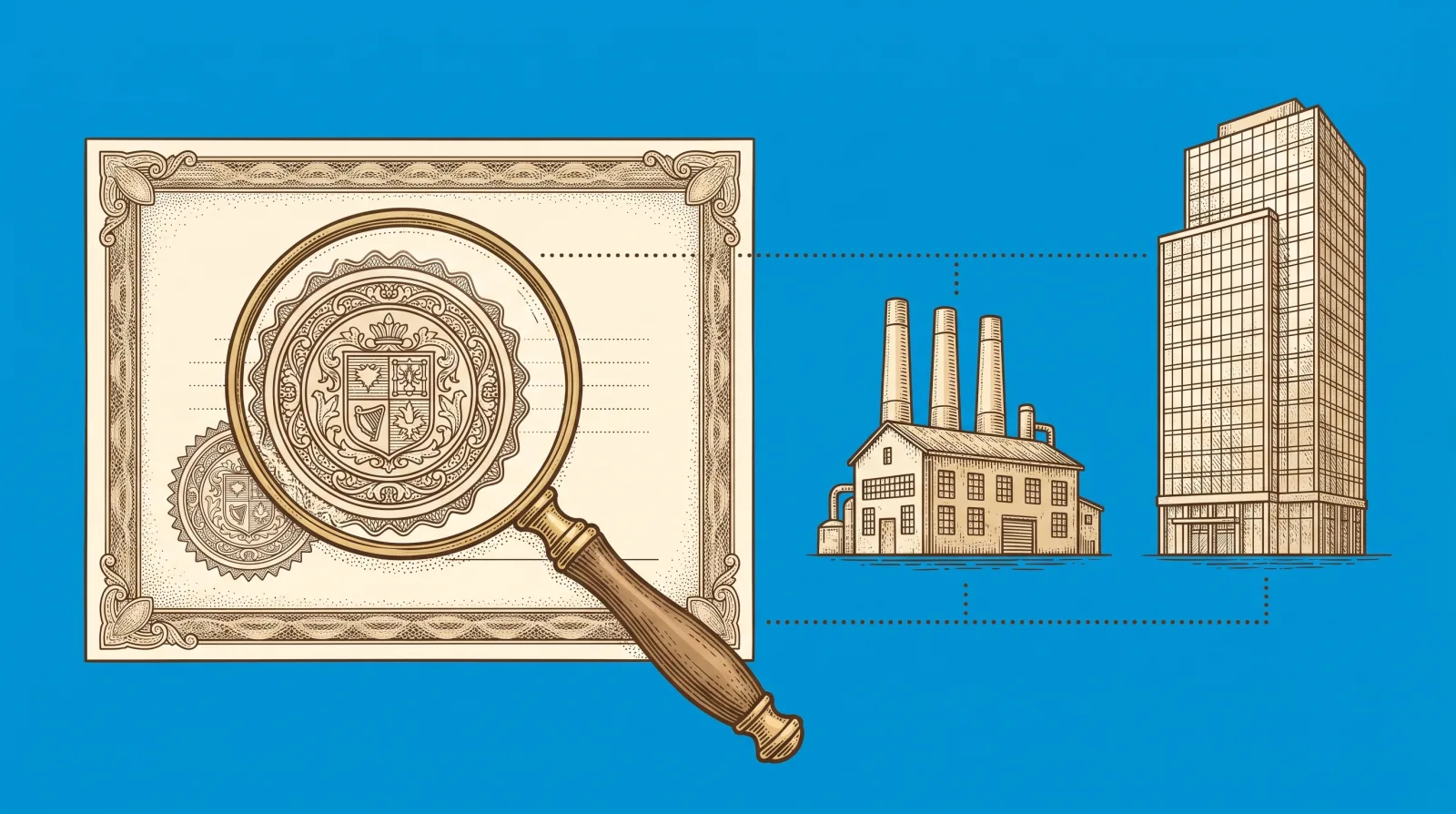
China dropshipping suppliers come in three forms: marketplaces, supplier platforms with an app, and China-direct fulfillment partners that run their own warehouse. Most sellers who think they have a supplier actually have a reseller with a dashboard. The supplier is rarely the problem; the missing verification is. The single most useful free check takes ten minutes: pull the company's business license and match it against China's official enterprise registry, run by the market regulator SAMR. This guide covers where suppliers are found, then the seven-step verification workflow we would run before trusting one, written from inside a Shenzhen warehouse.
The three types of China supplier, and which one you actually have
The phrase "Chinese dropshipping supplier" hides three different businesses. They behave differently at ten orders a day and completely differently at a hundred.
| Marketplace (AliExpress, DHgate tier) | Supplier platform or app (CJ, Zendrop, EPROLO tier) | China-direct fulfillment partner | |
|---|---|---|---|
| Who holds stock | The listing seller, unknown to you | The platform or its sourcing network | The partner, in its own warehouse |
| Who does QC | Nobody you can name | The platform, to a standard it may or may not publish | The partner, ideally with a published pass rate |
| Who sets the product price | The seller, all-in | The platform, one bundled number | Factory price, with the partner's fee shown separately |
| What happens at 100 orders a day | Stockouts, inconsistent items, no one to call | Processing windows stretch, minimums appear | Held stock, per-order flow, one accountable operation |
| What you can brand | Nothing | Sometimes an insert or label | The product, the box, the unboxing |
The uncomfortable line: the first two columns are resellers. That is not an insult, it is a category. A marketplace seller and a platform are both buying from a factory and selling to you at a number you cannot decompose. If your goal is to stay small and test products, a reseller is fine. If your goal is a brand, you need to know who actually makes the thing, which is what the verification workflow below is for. Our China dropshipping agent guide covers how the agent layer fits between these.
Where people actually find them
Every competing article has this section, so it stays short. Each channel has a failure mode.
- Marketplaces. The widest catalog and the least information about who is behind a listing. The failure mode is discovering, at volume, that your "manufacturer" is a shop reselling another shop.
- Supplier platforms and apps. Convenient, integrated, and priced as one bundled number. The failure mode is opacity: you never see factory price or margin. Our comparison of nine agents and platforms scores them on exactly this.
- Trade fairs. The Canton Fair and regional shows put real factories in front of you, and the failure mode is the follow-up: the person at the booth is sales, and the quote drifts once you are home.
- Referrals. The best channel and the least scalable. The failure mode is inheriting someone else's unverified trust.
- Direct outreach. Cold contact with factories found through registry or industry research. Slow, high effort, and the channel where verification matters most because nobody has vetted anyone for you.
None of these channels is the problem. Skipping verification after using them is.
How to verify a China supplier: the 7-step workflow
This is established due-diligence practice, drawn from published guidance by verification services and sourcing agents, and applied daily from our side of the warehouse. Each step has a pass and a fail.
Step 1. Pull the business license and check it against the official registry
Ask for the business license (营业执照). Then check it yourself: China's market regulator, the State Administration for Market Regulation (SAMR), runs the National Enterprise Credit Information Publicity System at gsxt.gov.cn and links to it from its own homepage. The record shows the registered Chinese name, the 18-character unified social credit code, legal representative, registered and paid-in capital, establishment date, registered address, approved business scope, and operating status (verification service ChineseCheck documents the fields).
Pass: the name, code and legal representative on the license match the registry, status is in-operation, and the business scope contains manufacturing terms. Fail: anything mismatched, a revoked or deregistered status, or a refusal to send the license at all.
Step 2. Read the business scope for manufacturing verbs
This is the test that separates a factory from a trading company, and it hides inside step one. ChineseCheck's guidance is that a real factory's scope contains manufacturing verbs, 生产 (produce), 制造 (manufacture), 加工 (process), plus the product category, while a trading company's scope is restricted to 销售 (sales), 批发 (wholesale) or 贸易 (trade). ExpoAlive's checklist puts it bluntly: a scope that is purely trading, with no manufacturing terms, means the company is not a factory.
Pass: manufacturing terms covering your product category. Fail: trading-only terms from a company that told you it was the factory. Some companies legitimately do both; the fail is the misrepresentation, not the trading. Our factory vs trading company cost math shows what the difference costs you per unit.
Step 3. Weigh company age against your order size
A manufacturer registered fifteen years ago has survived fifteen years of competition. A company registered last year may be excellent, or may be a shell. ExpoAlive's checklist advises caution with suppliers under two years old, especially on orders above $5,000. That is a risk combination to manage, not an automatic no: reduce the first order, pay in stages, sample first.
Step 4. Verify the registered address on a map
Look up the registered address from the registry record on Baidu Maps or Gaode Maps. ChineseCheck's published method is simple: factories sit in industrial or development zones, trading companies sit in office towers. A high-rise suite is fine if you know you are dealing with a trader and are priced accordingly. It is a problem if you were told otherwise.
Step 5. Ask for the invoice that only a real business can issue
Two free checks here, both from published verification guidance. First, ask for a Fapiao (official tax invoice) from a recent domestic transaction, and match the company name and tax number on it to the business license and registry record; verification service China Company Lookup publishes this as a standard step. Second, ChineseCheck's sharper test: ask in writing whether the supplier can issue a 13% VAT special invoice or only a 3% small-scale taxpayer invoice, because general taxpayers issuing 13% invoices must have annual revenue above RMB 5 million. A "factory" that can only issue small-scale invoices is smaller than it told you.
Step 6. Time their response, but time it fairly
Here is a correction to a number that circulates in this space. China is roughly 12 to 15 hours ahead of the continental US, so the realistic expectation is one reply cycle per business day (Hardware Secrets). Within that constraint, sourcing guide Xilink's rule of thumb is that a serious supplier answers within 24 hours, during Beijing business hours. Chronic slowness before you are a customer predicts what happens after you are one. Do not confuse the time-zone gap with slowness; do not excuse three-day silences with it either.
Step 7. Insist on a live video factory tour
Ask for a live, unscripted video call on WeChat or Zoom, walking the production line and the packing area. ChineseCheck estimates a live call captures 70 percent of the signal of an in-person audit at 1 percent of the cost, and stresses live rather than pre-recorded. ExpoAlive lists reluctance to do a live video call as a red flag suggesting the company has no factory or is showing someone else's. A refusal is close to disqualifying.
Then: sample, pilot, scale
Never jump to volume. Samples land in 5 to 10 days. The pilot run is where a hand-made sample meets a production line, and it is where sample-to-bulk quality drift shows up. Approve a physical sample, keep it, and inspect the pilot against the retained sample rather than against photos.
The hedging rule: qualify two suppliers before you depend on one. The cost of running the workflow twice is a few hours. The cost of a single point of failure at 100 orders a day is your quarter.
The Drop
Five winning products every week. Real margins, real factories, ready to import.
The red flags that end the conversation
Any one of these ends it for us. Two or more and we do not reply.
- Refuses to send the business license, or sends one that fails the registry check.
- Communicates only from a personal mobile number with no company domain, no registered entity behind the name.
- Refuses the live video tour, or offers only a pre-recorded clip.
- Quotes a price that moves once you mention volume, in the wrong direction or with new fees attached.
- Gives no written dispatch commitment. "Fast" is not a number.
- Sends an unbranded sample when branding was agreed, which tells you they did not make it.
The full pattern library, including the ones that only show up after you have paid, is in dropshipping agent red flags, and the tests that separate a real operation from a forwarding address are in how to verify a dropshipping agent.
What "reliable" should cost you
A supplier makes money in three ways, and you can only evaluate one you can see.
A per-order service fee, stated and charged when something ships. Visible, comparable, honest. A subscription, monthly, for access and tools. Also visible. A markup buried inside the product quote, which is where most of the money in this industry actually sits, and which typically runs 30 to 60 percent above factory price in undisclosed models. You cannot see it, so you cannot negotiate it, and the "free" platform that charges no subscription is often the one taking the most.
The operator's rule: you cannot evaluate a supplier whose margin you cannot see. Ask for the factory price and the fee as separate lines. A supplier who cannot or will not split them is telling you where the margin is.
Our own model is built around that rule. Goods are sourced at 0% markup on goods, the plans are published (Free at $0 with unlimited orders, Pro at $49, Brand at $79 a month, zero setup fees), and the per-order rate is charged only when a parcel actually ships. The rate depends on product and lane, which is what the shipping calculator answers with end-customer prices per destination, and the plan structure is on the pricing page.
Free vs paid supplier platforms
Free tiers are real, ours included. The question is never whether the subscription is free; it is where the money comes from instead.
If a platform charges no subscription and no visible per-order fee, the margin is inside the product price. That is not a scam, it is a business model, and it is fine at low volume. It becomes expensive at scale, because a 40 percent hidden markup on 3,000 units a month is a very large invisible number. Read "free" as "the fee is somewhere else" and go find it. The pricing hub shows, from published rate cards, how differently each region and model structures the bill.
When a supplier stops being enough
A supplier is enough while the product is generic, volume is modest, and a bad week is survivable. Four signals tell you that stage has ended:
- QC you cannot inspect. Defects arrive in customer emails rather than in an inspection report.
- Dispatch you cannot predict. A good sales day produces a bad shipping week.
- No branded packaging. Your parcel looks like everyone else's, and your repeat rate shows it.
- No single source of tracking. Your customer asks where the order is, and you ask the supplier, who asks someone else.
At that point you do not need a better supplier. You need a fulfillment partner that owns the warehouse, the inspection, the dispatch window and the tracking. That is the difference between the second and third columns of the first table, and it is what China-direct 3PL fulfillment exists to be.
What we check before a parcel leaves the warehouse
First-hand, from the floor in Shenzhen, because the abstract version of this section is what every competing article settles for.
Every inbound lot is checked against the approved sample at defined inspection points: quantity, material and finish, function where the product has one, packaging integrity, labeling. Units that fail do not ship, and the photo evidence goes to the client, which is the workflow our QC photo check post walks through. Our QC pass rate runs 99.6%. Approved orders dispatch in under 24 hours on average, and deliver with 99.8% accuracy on local last-mile carriers in 65+ countries, so the tracking your customer sees is the carrier they already know.
We do not warehouse in the US or Europe, and if your goods are made there, a local 3PL is your answer. Our whole model is China-direct, from sourcing at factory price through dropshipping fulfillment, and it only makes sense when the goods start in China.
Ready to source from verified factories at factory price? Connect your store on the Free plan, or get a sourcing quote for a specific product.
Last reviewed 5 September 2026.
Frequently asked questions
Who are the best dropshipping suppliers in China?
There is no single best one, and any list claiming otherwise is usually ranking itself. The right supplier depends on your stage: a marketplace or platform free tier for testing, a verified factory or fulfillment partner once a product proves demand. Judge candidates on a registry-checked license, manufacturing terms in the business scope, a live factory tour, a written dispatch commitment, and a visible split between product price and fee.
How do I know if a Chinese supplier is legitimate?
Check the business license against China's official enterprise registry at gsxt.gov.cn, run by market regulator SAMR. Confirm the name and unified social credit code match, the status is in-operation, and the business scope includes manufacturing terms if they claim to be a factory. Then verify the address on a map, request a live video tour, and ask which VAT invoice type they can issue.
Are Chinese dropshipping suppliers reliable?
Verified ones are, and the verification is the point. China manufactures most of the world's consumer goods, and the factories behind well-known brands are the same factories available to small sellers. Unreliability clusters around unverified resellers presenting as factories, and around jumping to volume without a sample and pilot stage. Run the seven checks and qualify two suppliers before depending on one.
What is the difference between a supplier, an agent and a 3PL?
A supplier makes or sells the product. An agent acts on your behalf to find suppliers, negotiate and arrange shipping, often as a person or small team. A 3PL (third-party logistics provider) holds stock, inspects, packs and ships orders from a warehouse it operates. A China-direct fulfillment partner combines sourcing and 3PL in one accountable operation, which is the model we run.
How much do China dropshipping suppliers charge?
Three ways: a per-order fee, a subscription, or a markup hidden inside the product price, which in undisclosed models typically runs 30 to 60 percent above factory price. Published platform subscriptions range from free to several hundred dollars a month. The number that decides your margin is the hidden one, so ask for factory price and fee as separate lines.
Do free dropshipping suppliers exist?
Free tiers exist, ours included, and none of them means no margin is taken. When there is no subscription and no visible per-order fee, the margin sits inside the product price. Free is a real entry point for testing; at volume, the invisible markup is what you are actually paying, so find it before you scale.
How long does shipping from China take?
Dispatch first, then transit. From our Shenzhen warehouse, approved orders dispatch in under 24 hours on average, and delivery averages 6.6 days across Tier-1 lanes, with a 3 to 10 day range depending on destination and service level. Samples arrive in 5 to 10 days. Lane-by-lane windows and end-customer prices are in the shipping calculator.
Chinese New Year 2027: The Sourcing Deadline That Hits Five Weeks After Christmas
Chinese New Year falls on 6 February 2027 and factories wind down from late January. The shutdown dates, the order deadlines, and how to stock through it.
Sample-to-Bulk Quality Drift: Why Order One Is Perfect and Order Three Is Not
Your sample was hand-built. Bulk runs on a line. Here is why sample vs bulk order quality drifts, the five honest causes, and the defences that actually hold.
Dropshipping Agent Red Flags: 8 Signs You Are About to Get Burned
Eight dropshipping agent red flags, from all-in pricing to personal-account payments, with what each one actually means and the exact check that settles it.
The Drop
Five winning products every week. Real margins, real factories, ready to import.