Yiwu Agent vs Direct Factory Sourcing: Where the Middleman Margin Hides
 By Bojan Dimov July 21, 2026 11 min read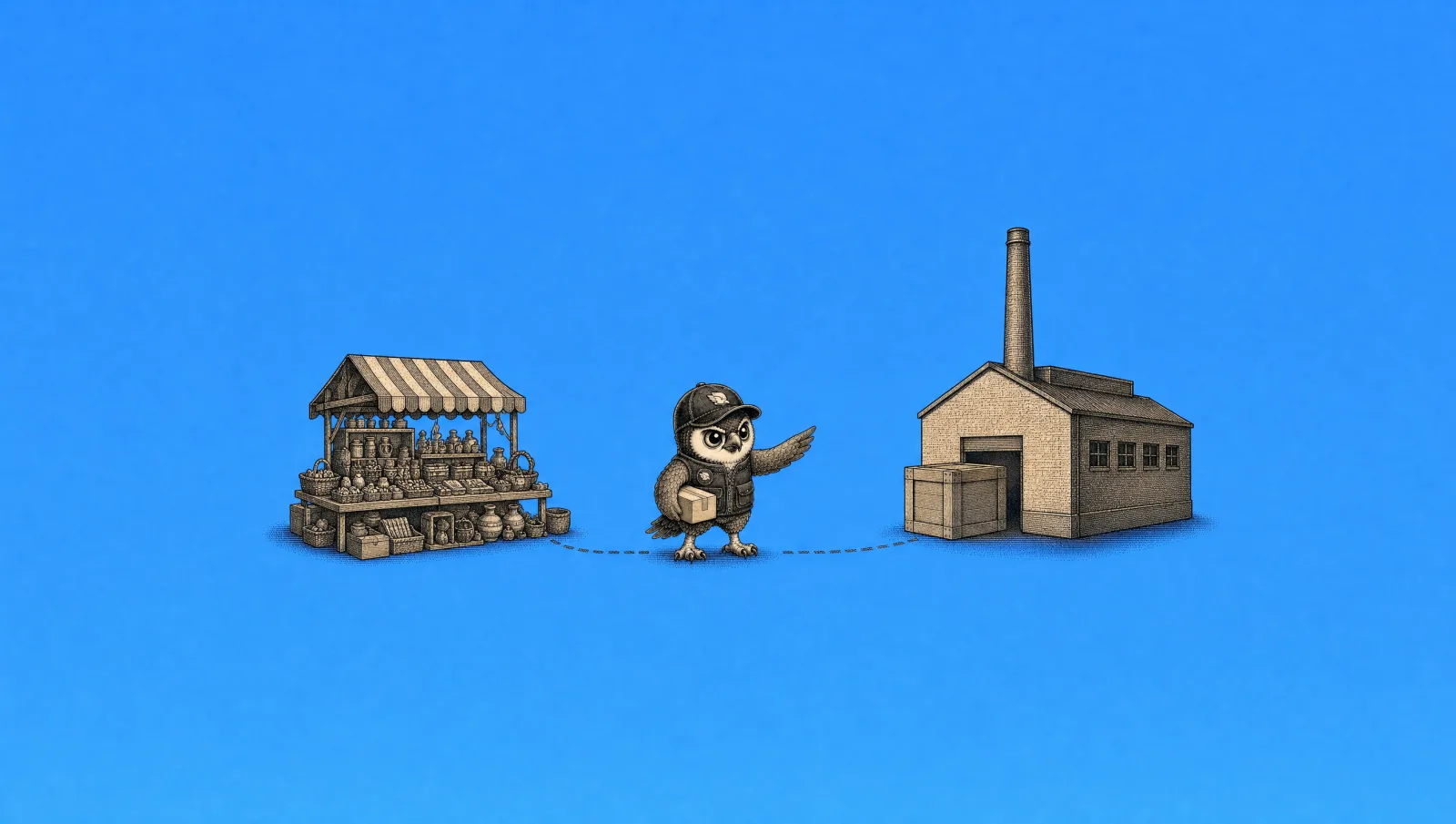
A Yiwu agent buys for you inside the Yiwu wholesale market, the world's largest small-commodities marketplace, where roughly 75,000 booths resell what China's factories make. Direct factory sourcing skips the marketplace and buys from the manufacturer itself. The short verdict: Yiwu is excellent for small, mixed, low-commitment orders of simple commodity goods, and expensive for everything else, because a market stall's margin plus an agent's commission sit between you and the factory price. This guide maps where that margin hides, which Chinese provinces actually make what, the documented cases of what goes wrong with unaccountable middlemen, and when each route, Yiwu, the Canton Fair, or factory-direct, is the right call.
What Yiwu actually is: a reseller marketplace, and a great one
Yiwu International Trade City, in Zhejiang province, is the largest wholesale market on earth. The World Bank called it exactly that back in 2005, and the numbers have only grown since: the complex spans millions of square meters across five districts, with around 75,000 booths selling hundreds of thousands of distinct products, from toys, jewelry, and party supplies in District 1 to bags, hardware, and kitchenware in District 2. It is a genuinely impressive machine, and for its core job it has no equal.
But be precise about what that job is. Yiwu is a reseller marketplace for small commodities. The people behind those booths are overwhelmingly traders and distributors, not manufacturers. The goods on the shelf were made somewhere else, usually in a specialized factory cluster hours away, and brought to Yiwu so that buyers can browse 400 categories in one building instead of driving to 400 towns. That convenience is the product, and it is priced in.
A yiwu agent is the person who navigates this for you: walks the districts, collects quotes from stalls, consolidates your mixed order, arranges export. For a first container of assorted low-value goods, a good one earns their fee. The problem is structural, not personal: your agent is buying from a reseller, so you inherit two margins before your goods ever leave Zhejiang, and neither of them is written down anywhere you can audit.
The map Yiwu agents do not show you: what each province actually makes
Here is the fact that reframes the whole Yiwu question. China's manufacturing is not spread evenly; it is concentrated in specialized clusters, each town or province dominating one category. After three years running sourcing from Shenzhen, this is the operator's map we work from:
| Region | What it actually makes |
|---|---|
| Shenzhen, Guangdong | Consumer electronics, PCBs, chargers, audio, smart devices |
| Dongguan, Guangdong | Electronics assembly, toys, precision plastics |
| Guangzhou, Guangdong | Fast-fashion apparel, beauty and cosmetics, leather goods |
| Foshan, Guangdong | Furniture, ceramics, home fixtures |
| Zhongshan (Guzhen), Guangdong | Lighting, the town is literally known as the lighting capital |
| Yiwu, Zhejiang | Small commodities trading: accessories, party goods, crafts (the marketplace itself) |
| Ningbo and Cixi, Zhejiang | Small home appliances, plastic housewares |
| Yongkang, Zhejiang | Hardware, tools, scooters, vacuum flasks |
| Taizhou, Zhejiang | Plastics, molds, injection tooling |
| Shaoxing (Keqiao), Zhejiang | Fabrics and textiles, one of the largest textile hubs anywhere |
| Wenzhou, Zhejiang | Shoes, eyewear, low-voltage electrical |
| Danyang, Jiangsu | Optical lenses and glasses |
| Nantong, Jiangsu | Home textiles, bedding, towels |
| Jinjiang and Quanzhou, Fujian | Sports shoes and sportswear |
| Xuchang, Henan | Human-hair wigs and extensions |
Read that table, then ask the only question that matters: is your product's real factory in Yiwu? For most products the answer is no. The stall in District 2 selling that kitchen gadget bought it from Cixi. The phone accessories came from Shenzhen. The gym wear came from Jinjiang. A Yiwu agent shops the mall. Direct factory sourcing goes to the cluster where your product is actually made, which is exactly how our sourcing desk works: 30,000+ verified factories across these regions, quoted at the factory's own price with 0% agent markup.
Where the Yiwu-agent margin hides
Stack the layers on a typical Yiwu purchase and the anatomy looks like this:
- The factory price, paid by the stall's owner or their upstream distributor, in the cluster where the item is made.
- The booth margin. The stall exists to profit on resale. Reasonable, visible to nobody.
- The agent's cut. Commonly a commission on order value, and sometimes also a spread between the stall price and the price you are quoted. You see one number.
- Consolidation and export fees, the legitimate logistics layer.
By the time a quote reaches you, layers two and three are fused into "the price." You cannot negotiate what you cannot see, and this is the same mechanism we itemized in our factory vs trading company cost math: in undisclosed models, the gap between factory price and your price typically runs 30 to 60%. On low-value commodity goods bought in small mixed lots, that premium is the fair cost of convenience. On the products that carry your brand and your volume, it is your margin, leaking silently, every reorder.
The Drop
Five winning products every week. Real margins, real factories, ready to import.


The cautionary cases: what unaccountable middlemen cost
None of what follows is unique to Yiwu, and that is the point. The risk is not a city, it is any sourcing chain where the person spending your money has no published prices, no verifiable identity behind the quote, and no contractual accountability. The trade lawyers who clean up these cases have documented the patterns.
- The agent who was secretly the markup. Harris Sliwoski, an international manufacturing law firm, documented a US home goods company that overpaid $2.4 million over three years: their "factory" was actually a sourcing agent posing as one, charging roughly 40% above direct factory price and quietly switching production to a cheaper manufacturer to protect its own spread. The same firm reports uncovering 5 to 10 cases like this every year.
- The 5% commission that was not. The same investigation series describes a European electronics buyer whose agent claimed a modest 5% commission while inflating product prices by around 35% and collecting a further 10-15% kickback from the factories.
- The bait-and-switch. The single most commonly reported import problem: a perfect sample, then a bulk shipment that does not match it. Without independent QC between production and dispatch, you find out when your customers do.
- The deposit that vanished. The crudest pattern: a 30% deposit wired, then silence, a dead website, a deleted chat account.
Notice what every case has in common. It is never really about one bad actor; it is about a structure with no line of sight. The buyer could not see the factory, could not audit the price, and had no single accountable counterparty. That is the disease. Transparency is the cure, and it is cheap to demand: published fees, verifiable factories, QC with a number attached.
The Canton Fair: the other classic route
The serious alternative to marketplace sourcing has run since 1957: the Canton Fair, officially the China Import and Export Fair, held twice a year in Guangzhou. It is China's largest trade fair, with 25,000+ exhibitors across three phases; the Autumn 2026 edition runs October 15-19 (electronics and lighting), October 23-27 (consumer goods and ceramics), and October 31 to November 4 (textiles and medical), as of current published schedules.
The Canton Fair fixes Yiwu's biggest weakness: a meaningful share of exhibitors are actual manufacturers, so you can meet the factory, handle the product, and negotiate at the source. If you can be in Guangzhou in April or October, go once; it is the best education in Chinese manufacturing a founder can buy for the price of a flight.
Its limits are practical. It happens two windows a year, your product's phase lasts five days, and a business card from a booth is the start of diligence, not the end of it. Factory verification, samples, QC, production monitoring, and freight still have to happen after everyone flies home, across time zones, for every SKU, forever. The fair is a brilliant front door. It was never designed to be the operating system.
The centralized alternative: one company, factory-direct, accountable
Here is the model we built Peregrine around, and it is the direct answer to both the Yiwu margin stack and the after-the-fair problem: one centralized sourcing and fulfillment company that handles the whole chain, at published prices.
What that means in practice:
- Factory-direct across the clusters. Our sourcing desk in Shenzhen quotes from 30,000+ verified factories in the regions mapped above, at the factory's price, with 0% agent markup versus the 30-60% typical of undisclosed models. Same-day quotes in 92% of cases.
- Verification and QC built in, with numbers. Factories are verified before they quote, samples reach you in 5 to 10 days, and production is inspected against the approved sample with a 99.6% QC pass rate, which is precisely the check that kills the bait-and-switch pattern.
- One accountable counterparty. One contract, one dashboard, one support thread. No stall, agent, consolidator, forwarder chain where responsibility dissolves at every handoff.
- Sourcing fused to fulfillment. The same company that found your factory stores and ships your orders: sub-24h dispatch from our own Shenzhen warehouse through China-direct 3PL fulfillment, delivered in 3 to 10 days on the local carrier your customer already trusts.
The difference from a general China sourcing agent is the centralization: not a freelancer forwarding stall quotes, but an owned pipeline from factory floor to your customer's door, with every fee visible before you commit. If your route to market is dropshipping specifically, the same transparency test applies to the fulfillment layer, which we break down in what a China dropshipping agent actually does.
Yiwu agent vs Canton Fair vs factory-direct, side by side
| Yiwu agent | Canton Fair | Direct factory sourcing (Peregrine) | |
|---|---|---|---|
| Who you buy from | Market stalls (resellers) | Exhibitors, many are manufacturers | Verified manufacturers |
| Price transparency | Two hidden layers (booth + agent) | Negotiated face to face, then re-verified later | Factory price shown, 0% markup, fees published |
| Best for | Small mixed lots of simple commodities | Meeting factories, scouting categories | Branded, repeat, margin-sensitive products |
| MOQ | Very low, per stall | Factory-level, negotiable in person | Negotiated down or consolidated across factories |
| QC | Rarely systematic | Yours to arrange afterward | 99.6% pass rate, checked before dispatch |
| Customization and branding | Limited, stalls sell what exists | Possible, long follow-up loop | Yes, factory-direct with custom packaging |
| Timing | Any day of the year | Two windows a year | Same-day quotes in 92% of cases, year-round |
| Accountability | Split across stall, agent, forwarder | Split across exhibitor and your own chain | One company, end to end |
When a Yiwu agent still makes sense
Fair is fair. Choose Yiwu, with a reputable agent, when your order genuinely matches the market's design: assorted low-value commodities, small trial quantities across many SKUs, no branding requirements, and price-per-unit mattering less than variety per container. Gift shops, party-supply importers, and market traders live well on this model. If that is your business, a Yiwu agent is not a mistake; it is the correct tool.
The switch point arrives the moment a product becomes yours: your brand on it, your repeat volume behind it, your margin depending on it. From that point on, every unseen percentage between you and the factory compounds monthly, and the reseller marketplace becomes the most expensive convenience in your P&L.
How to move from a Yiwu agent to factory-direct
The migration is smaller than it feels, because you risk one SKU, not your business.
- Pick your best-seller. The product where a hidden margin hurts most is where transparency pays fastest.
- Get a sourcing quote. Send the product link or spec. Our desk returns a verified-factory quote, same-day in 92% of cases, at the factory price with the fees itemized.
- Compare line by line. Factory price plus visible fees against your current all-in Yiwu quote. The delta is the margin you have been donating.
- Sample and verify. Samples in 5 to 10 days, inspected before they reach you.
- Move the SKU, keep the agent for the leftovers. Route the branded product factory-direct with QC and sub-24h dispatch, and keep buying party supplies in District 1 if that still serves you. This is a portfolio decision, not a divorce.
Frequently asked questions
What is a Yiwu agent?
A buying agent who sources goods from the Yiwu wholesale market in Zhejiang, the world's largest small-commodities marketplace with roughly 75,000 booths. The agent collects quotes from market stalls, consolidates mixed orders, and arranges export. Because stalls are resellers, purchases carry the booth's margin plus the agent's commission on top of the factory price.
Is Yiwu cheaper than buying direct from a factory?
Per unit, almost never, because Yiwu stalls resell factory goods. Yiwu wins on flexibility: tiny quantities, huge variety, one location. Factory-direct wins on price and control at volume, removing layers that in undisclosed models typically total 30 to 60% above factory price.
Is Yiwu a factory or a market?
A market. Yiwu International Trade City is a wholesale trading complex; the products sold there are manufactured in specialized clusters across China, such as electronics in Shenzhen, small appliances in Cixi, hardware in Yongkang, and sportswear in Jinjiang.
Yiwu market vs Canton Fair: which is better for sourcing?
Different tools. Yiwu is a year-round reseller marketplace for small mixed commodity orders. The Canton Fair in Guangzhou, each spring and autumn with 25,000+ exhibitors, is where you meet manufacturers, but it runs two windows a year. For branded repeat products, factory-direct sourcing through one accountable company combines factory access with year-round execution.
Which is better for dropshipping, a Yiwu agent or factory-direct?
For testing assorted cheap products, a Yiwu route works. For scaling specific winners, factory-direct is structurally better: factory pricing at 0% markup, QC before dispatch, custom packaging, and sub-24h dispatch from the same company.
Chinese New Year 2027: The Sourcing Deadline That Hits Five Weeks After Christmas
Chinese New Year falls on 6 February 2027 and factories wind down from late January. The shutdown dates, the order deadlines, and how to stock through it.

China Dropshipping Suppliers in 2026: How to Find One, and How to Verify It Before You Trust It
How to find China dropshipping suppliers in 2026, plus the verification workflow that separates a real factory from a reseller: license checks, Fapiao cross-checks, and the red flags.
Sample-to-Bulk Quality Drift: Why Order One Is Perfect and Order Three Is Not
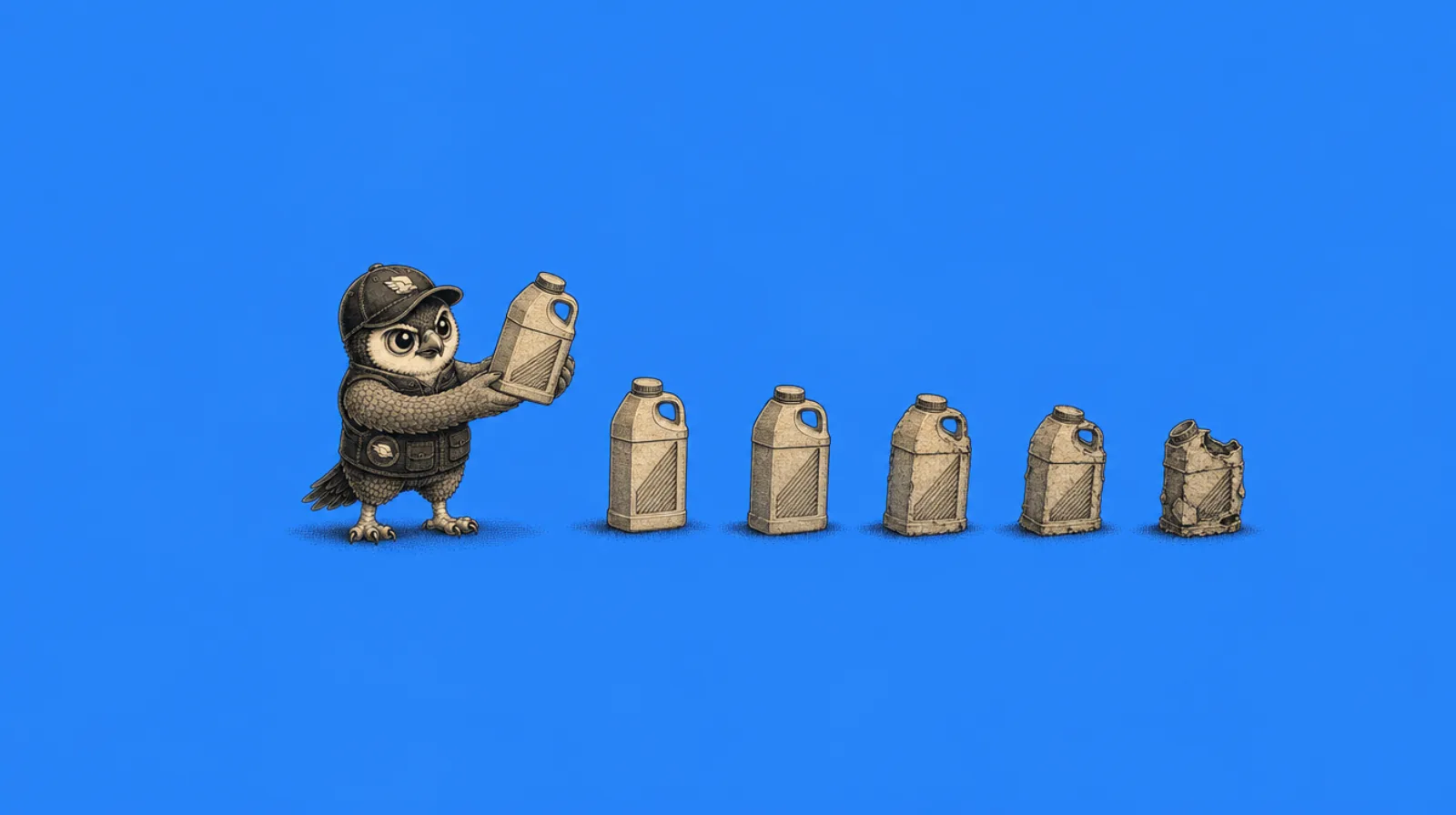
Your sample was hand-built. Bulk runs on a line. Here is why sample vs bulk order quality drifts, the five honest causes, and the defences that actually hold.
The Drop
Five winning products every week. Real margins, real factories, ready to import.