Private Label Dropshipping in 2026: What It Costs, What MOQ You Actually Need, and How to Brief a Factory
 By Bojan Dimov September 5, 2026 14 min read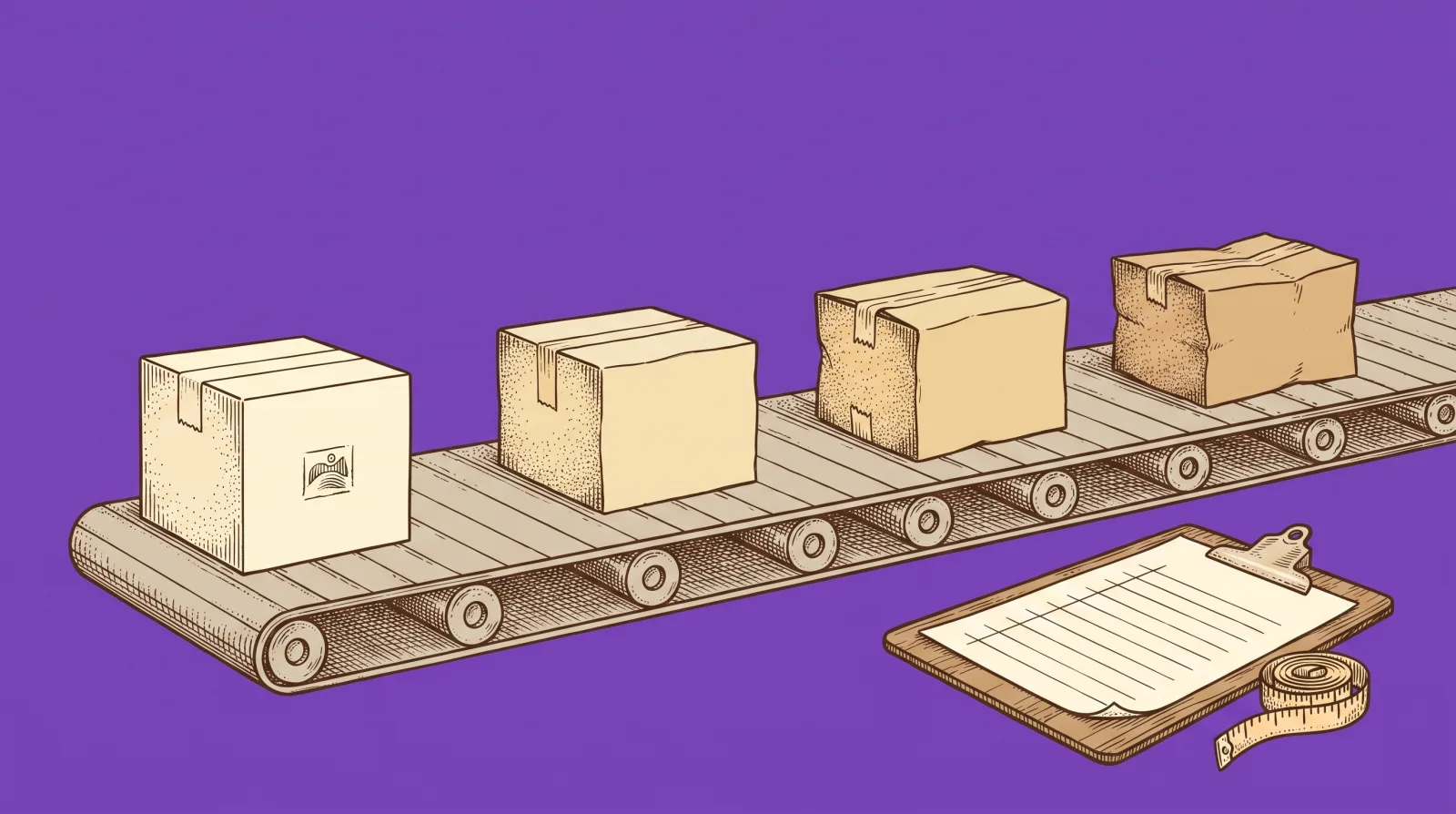
Private label dropshipping means selling a product made to your specification under your own brand, fulfilled without you touching stock. White label is an existing product with your logo on it. OEM is your own design manufactured for you. Entry money is smaller than most people fear: published guides put starting capital between $2,000 and $10,000, with some sellers starting on $500 to $2,000, and minimum order quantities of roughly 100 to 300 units for simple logo work. The real risk is not the money. It is order three arriving different from the sample you approved. This guide covers the cost stack, how to negotiate MOQ down, the exact brief to send a factory, and how to stop that drift.
Private label vs white label vs OEM vs generic
The whole category leaves these four terms blurred, which is how people order 500 units of the wrong thing. Shopify's definitions are the cleanest: a private label product is exclusive to one brand with custom formulation, features or packaging, while a white label product is a pre-made generic sold to multiple retailers who each add their name. An OEM builds goods to the hiring brand's specifications, and the brand sells them under its own name.
| Generic dropshipping | White label | Private label | OEM | |
|---|---|---|---|---|
| Who owns the design | The factory | The factory | You, to your spec | You, fully |
| What you can change | Nothing | Logo, sometimes packaging | Materials, colours, formula, packaging | Everything |
| Typical MOQ | None | Low, often 100 to 300 (published guides) | 100 to 300 for logo and packaging; 500 to 1,000+ for product changes | 500 to 1,000+ (Shopify) |
| Typical cost to start | Low hundreds | $500 to $2,000 (USAdrop) | $2,000 to $10,000 (Yakkyofy) | Higher, tooling-dependent |
| How defensible | Not at all | Weak, anyone can label the same item | Real, if the spec is yours | Strongest |
The confusion that costs money: most "private label" offers on marketplaces are white label. Same product, your sticker. That is a fine first step, and it is not a moat. If a competitor can order the identical item and put a different logo on it, you have branding, not a brand.
What it actually costs to launch
The supplier listicles quote the factory price and stop. Here is the full stack, every line the guides omit.
| Line | What it covers | Notes |
|---|---|---|
| Sample rounds | Usually two or three iterations of a physical sample | Samples land in 5 to 10 days each round |
| The pilot run | A small production batch, before the real MOQ | The most valuable money you will spend; see below |
| Custom packaging | Box, insert, mailer, print | Can be done per order without a giant MOQ; see custom packaging without a 500-unit MOQ |
| Product photography | Shots for the store, ads, marketplaces | Often forgotten until launch week |
| Trademark | US: from $350 per class, 12 to 18 months (USPTO). EU: €850 for one class, €50 for a second, €150 each further class (EUIPO) | Optional at launch, essential before scale |
| Freight and duty on the bulk shipment | If stock moves to a warehouse outside China | Paid upfront, before revenue |
| The bulk order itself | Factory price times MOQ | The line everyone quotes; rarely the biggest surprise |
On the totals: Yakkyofy's 2026 guide puts starting capital at $2,000 to $10,000; USAdrop says many sellers begin with $500 to $2,000 covering samples, an initial order, basic branding and a store. Treat both as published ranges, not quotes for your product.
The cash-flow truth underneath every line: this money leaves before revenue arrives. That is the single biggest difference from per-order dropshipping, where your customer pays you before you pay anyone. The mechanics of what held stock does to a small store's cash are worked through in the cash-flow math post. Read it before you sign a bulk order.
The Drop
Five winning products every week. Real margins, real factories, ready to import.
MOQ, and how to negotiate it down
The published reality first. Simple logo addition and custom packaging usually requires 100 to 300 units, and product modification 500 to 1,000 (Yakkyofy). SourceToDoor's sourcing guide gives the same shape: 100 to 300 for simple logo work, rising to 500, 1,000 or more once custom packaging, colours, moulds or formulas are involved. Shopify puts OEM and custom-formula work at 500 to 1,000 units.
Those are starting positions, not laws. Four operator methods that move them:
- Split the MOQ across colourways. A factory quoting 500 units will often accept 500 across three colours rather than 500 of one, because the production setup is shared. You get range without tripling the order.
- Start logo-only, add custom packaging in round two. Logo application has the lowest MOQ. Prove the product sells before committing to a packaging run.
- Use packaging to build brand perception before you can afford tooling. A well-designed box on a white-label product does more for perceived value than a custom mould you cannot yet fund, and per-order packaging application removes the MOQ problem entirely.
- Ask for a pilot run rather than a first order. Frame it as a production test. Factories accept smaller pilot quantities when the follow-on order is credible, and the pilot is where you catch the problems in the next section.
At 0% markup on goods, our sourcing team negotiates these on your behalf from 30,000+ verified factories, and the factory price you see is the factory price.
The product brief that gets you a real quote
A vague brief is why quotes come back inconsistent and why factories quietly substitute materials. The factory is not cheating you; it is filling the gaps you left. Copy this into an email and fill every line.
PRODUCT BRIEF

Target market and sales channel: [e.g. US and UK, Shopify store]
Product and use case: [what it is, who uses it, how]
Materials and finish: [exact material, grade, surface finish, e.g. 304 stainless, matte powder coat]
Dimensions: [L x W x H in mm, with tolerance]
Weight: [grams, target and maximum; weight drives shipping cost]
Colourways: [list, with Pantone or RAL codes]
Packaging spec: [type, dimensions, material, print method, insert yes/no]
Logo placement and method: [where, size in mm, method e.g. screen print, embossing, laser]
Certifications required for destination market: [e.g. CE, FCC, FDA food-contact, REACH]
Target MOQ: [units, and whether split across colourways]
Expected monthly volume after launch: [range]
Sample deadline: [date]
Attachments: [reference photos, drawings, approved sample photos if any]
Three notes from our side of the warehouse. Weight is the line people leave blank, and it decides your shipping cost per unit; run the target weight through the shipping calculator before you brief, because 50 grams either way changes the landed economics. Certifications are the line people do not know to fill, and the one that stops a shipment at a border. And "similar to" a reference photo is not a specification; a factory reading "similar to" will make its own version.
Sample, pilot, then scale
Real timings from our operation: samples arrive in 5 to 10 days, and 92% of sourcing quotes come back the same day. The sequence that protects you is sample, then pilot, then scale, and the step people skip is the middle one.
Here is the failure mode every competing guide omits. The sample is made by hand, by someone who knows a buyer is judging it. Order three comes off a production line with a tired process, a substitute material that "was the same," and no one comparing it to anything. Inspection firms are precise about the fix: production batches are compared against an approved reference sample, which SGS describes as the comparison basis for shipment inspection. Sourcing guide HiSourcing calls the gap between the sample and the volume run "where most quality problems hide."
The defence is procedural. Approve a physical sample. Retain it, in your hands or your fulfillment partner's. Then inspect the pilot run, and every bulk run after it, against the retained sample rather than against photos. Photos flatter; a side-by-side does not. The full mechanics, including which product categories drift most, are in sample-to-bulk quality drift.
The inspection step everyone lists and nobody performs
Every guide names "inspect before shipping" as a step and abandons the reader there, as if inspection were a button. It is a process with defined points.
At our warehouse in Shenzhen, an inbound lot is checked against the retained approved sample at set inspection points: count, material and finish, dimensions and weight against the brief, function where the product has one, packaging and print integrity, and label accuracy. Units that fail are held and photographed, and the photo evidence goes to the client before anything ships, which is the workflow shown in the QC photo check post. The pass rate runs 99.6%. Once approved, orders dispatch in under 24 hours on average, with 99.8% delivery accuracy on local last-mile carriers.
The structural point, stated plainly: for our clients this step is not something to arrange with a third party and pay for separately. It is included in the flow, because a brand's whole value sits in the box matching the promise. That is the operational difference between DTC fulfillment and generic dropshipping.
When to make the jump
The decision to go private label is a cash-flow decision wearing a branding costume.
Ready: a product with proven repeat purchase, a refund rate you understand and can explain, and enough runway that stock will not strangle cash flow while it sells through. A useful test: if the pilot run sold nothing for eight weeks, would the business survive? If the honest answer is no, the pilot is too big or too early. Not ready: chasing a trend, no repeat data yet, or funding the pilot with money already earmarked for ads.
On triggers, the published guidance is thinner than it sounds. Yakkyofy suggests three or more months of consistent sales before moving a product to private label. A widely circulated rule of thumb from Guided Success Academy is around 300 orders a month. Both are reasonable starting points, and both are weaker signals than the two markers we watch on real accounts: repeat-purchase rate, because people coming back to an unbranded product will come back harder to a branded one, and refund rate, because branding a problem product scales the problem.
This article is the sequel to dropshipping vs DTC brand, which ends on the advice to test generic and brand the winners. This is the "okay, how." The answer, compressed: brief precisely, sample and retain, pilot before MOQ, inspect against the sample, and only then scale.
Ready to brief a factory? Get a sourcing quote at 0% markup on goods, or see pricing for the Brand plan.
Last reviewed 5 September 2026.
Frequently asked questions
What is private label dropshipping?
Selling a product manufactured to your specification under your own brand name, with fulfillment handled by a partner so you never hold or ship stock yourself. It differs from white label, where an existing generic product carries your logo, and from generic dropshipping, where you sell the factory's product as-is. Private label gives you the product, the box and the customer relationship.
How much does private label dropshipping cost to start?
Published guides put starting capital between $2,000 and $10,000 (Yakkyofy), with USAdrop reporting many sellers begin with $500 to $2,000 covering samples, a first order, basic branding and a store. The full stack also includes sample rounds, a pilot run, packaging, photography, and optionally a trademark, from $350 per class in the US. This money leaves before revenue arrives.
What is the minimum order quantity for private label?
Published ranges put simple logo and packaging work at roughly 100 to 300 units, rising to 500 to 1,000 or more once custom colours, moulds, formulas or product modifications are involved (Yakkyofy, SourceToDoor, Shopify). These are starting positions: splitting across colourways, starting logo-only, and asking for a pilot run all move them down.
What is the difference between private label and white label?
White label is a pre-made generic product that multiple retailers sell under their own names, so your only change is the logo. Private label is made to your specification, exclusive to your brand, with custom features, formulation or packaging (Shopify's definitions). White label is faster and cheaper to start; private label is defensible because a competitor cannot order the identical item.
Can I private label without holding inventory?
Yes, if your fulfillment partner holds the stock and applies your branding. The bulk order still has to be paid for before it sells, so you avoid handling inventory but not funding it. Per-order custom packaging application also lets you brand a product without committing to a large packaging run, which is often the cheapest first brand step.
How long does a private label order take from sample to shipping?
Samples arrive in 5 to 10 days per round, and quotes typically come back the same day. Add a pilot run before the full order, then production time set by the factory and product. Once approved stock is in the warehouse, orders dispatch in under 24 hours on average and deliver in 3 to 10 days depending on lane, averaging 6.6 days on Tier-1 lanes.
Do I need a trademark before I start?
Not to start; yes before you scale. A US application costs from $350 per class at the base electronic rate and USPTO says registration usually takes 12 to 18 months, so file early if the brand is the plan. An EU trade mark filed online is €850 for one class and lasts 10 years. Launch on a pilot without one, then file before the name is worth copying.
AI Shopping Agents at Peak: Getting Found When One in Five Holiday Visits Is a Bot
Salesforce expects AI agents to drive 20% of holiday ecommerce traffic in 2026. What agents read, what they skip, and how to make your store machine-readable.
What TEMU and SHEIN Taught Every DTC Brand About Cross-Border Fulfillment
You will never have TEMU's ad budget. But the cross-border fulfillment playbook they proved out is now available to anyone shipping 100+ orders a month.
The Drop
Five winning products every week. Real margins, real factories, ready to import.