Holiday Returns 2026: Handling the January Wave When Your Product Ships From China
 By Bojan Dimov September 29, 2026 11 min read
Holiday returns arrive in January. Retailers surveyed by the NRF and Happy Returns expect 17% of holiday sales to be returned, and the NRF says the vast majority of holiday returns happen after the festive season, in January. The standard advice assumes a warehouse down the road where returned stock goes back on a shelf. When your product ships from China, sending it back usually costs more than the item is worth, and there is no local shelf to put it on. So the real decisions, your holiday return policy, the value below which you refund without asking for the item back, and your fraud rules, have to be made before December, not in the January rush.
The numbers
The most-cited return figures come from a survey of large US retailers by the National Retail Federation and Happy Returns (NRF, 15 October 2025).
| Statistic | Figure |
|---|---|
| Share of 2025 retail sales returned | 15.8%, or $849.9 billion |
| Share of online sales returned | 19.3% |
| Share of holiday sales retailers expect back | 17% |
| Share of returns that are fraudulent | 9%, among merchants that track fraud |
| Shoppers who expect to return unwanted gifts within a month | 82% |
| When holiday returns happen | The vast majority in January |
These are estimates from retailers with more than $500 million in revenue plus a consumer survey, not measured returns, and the fraud figure excludes wardrobing. The January timing comes from the NRF's winter holiday FAQs. Treat them as a planning range, then check your own history: a store selling apparel will see far more returns than one selling phone cases.
Shoppers' expectations are also being set by the easiest returns in retail. UPS and Happy Returns now run box-free return drop-offs at 10,000 US locations, with 79% of Americans living within five miles of one (UPS, 21 April 2026). Your customers will compare your process with that.
Why cross-border returns are different
A returned parcel has to go somewhere, and for a store that ships from China, every destination is awkward.
Back to China. International return postage, export and import paperwork in both directions, and weeks in transit. For most items under about $50, the return costs more than the goods did, and the item arrives back after the season it was bought for.
To a local returns address. Someone has to receive it, check it and decide what happens next. If you do not hold stock in that country, the item cannot go back on a shelf to fill the next order, because your orders ship from China. It needs a separate resale channel, a donation or disposal.
Nowhere. Refund the customer and let them keep the item. It sounds expensive, but it is often the cheapest option, which is the point of the next two sections.
This is also why the decisions must come before December. In January you will be deciding case by case, under pressure, at volume. Decided in November, the same choices become a policy your support team can apply in seconds.
Set your holiday return policy before December
Customers expect a longer window for gifts, because big retailers have trained them to. For the 2025 season, Amazon let most items bought from 1 November to 31 December be returned until 31 January 2026 (Amazon, 3 December 2025). Best Buy ran to 15 January for purchases from 31 October. The 2026 versions have not been announced yet, but expect something similar.
Five decisions to write down now:
- The window. A holiday extension for orders placed from early November, typically ending in mid to late January.
- Conditions. Unused, with tags or original packaging, and with the order number.
- What is not returnable. Personalised items, and hygiene-sensitive items such as earrings and cosmetics once opened, where the law allows it.
- Who pays return shipping, and to where. A local address, not the origin country.
- Refund or store credit. Store credit keeps the money in the business; refunds are what the customer expects for faulty goods.
Mind the law as well as the calendar. In the EU and the UK, customers have a legal right to cancel most online orders within 14 days of delivery (EU Consumer Rights Directive; UK Consumer Contracts Regulations), so your holiday policy adds to that right rather than replacing it.
The Drop
Five winning products every week. Real margins, real factories, ready to import.

The refund-without-return threshold
Here is the question to settle before January: below what value is it cheaper to refund and let the customer keep the item than to get it back?
The logic is simple. If a refund is due, you pay it either way. What differs is the cost of getting the item back against what the item is worth to you once it is back. For a store with no local stock, that second number is often close to zero.
| Low-value accessory | Mid-value item | High-value item | |
|---|---|---|---|
| Sale price | $25 | $60 | $150 |
| Goods cost | $6 | $18 | $45 |
| Cost to get it back (label and handling, illustrative) | $9 | $10 | $12 |
| Value to you once back, if resellable | $0 to $6 | $0 to $18 | Up to $45, plus a fraud deterrent |
| Sensible policy | Refund, customer keeps it | Refund with photos; return only if resellable | Require the return |
All figures illustrative. Use your own goods cost, a quoted local return label and your real resale options.
On the $25 accessory, asking for the item back spends $9 to recover something worth at most $6 to you, and only if you can resell it. Refund it and move on. On the $150 item, the return protects $45 of goods and discourages abuse, so require it. The mid-value band is where photos earn their keep: if the photo shows a defect, refund without return; if it shows an unwanted gift in perfect condition, decide by whether you can resell it locally.
Two limits keep a returnless policy from being abused: a value cap per item, and a limit per customer per season.
Holiday return fraud
The January wave carries more abuse than any other month, and the survey data shows how common each type is.
| Type | What it is | How common |
|---|---|---|
| Wardrobing | Using an item, then returning it | Admitted by 27% of shoppers and 49% of Gen Z |
| Empty box | Returning a box without the item | Admitted by 18% of shoppers; 65% of retailers that track it saw it rise |
| Decoy return | Sending back a different or fake item | Admitted by 20% of shoppers; 64% of retailers saw it rise |
| Label tampering | Faking a return label or tracking | Admitted by 20% of shoppers |
| False "not received" claim | Claiming a delivered parcel never arrived | Cited by 52% of merchants in 2026 |
Sources: NRF and Happy Returns 2025 consumer and retailer surveys; Merchant Risk Council 2026 report.
Rules that protect you without punishing honest customers:
- Photos for damage and defect claims, within a short window after delivery, such as 48 hours.
- Returnless refunds only below your threshold, and once per customer per season.
- Tamper-evident tags on higher-value apparel and accessories, to stop wardrobing.
- Delivery evidence for "not received" claims. Keep the carrier's delivered scan and any delivery photo, because that is what decides a dispute. The dispute side is in chargeback math for slow shipping.
- A written policy, published before Black Friday, so every decision in January points to a rule the customer already agreed to.
Prevent the returns you can
The cheapest return is the one that never starts, and most returns begin before the parcel ships.
Accurate photos and descriptions. The gap between what the listing showed and what arrived is the biggest avoidable cause of returns; the first lever in how DTC brands cut returns from 8% to 2%.
Honest sizing. In apparel, "did not fit" drives most returns, and a gift someone else has to size is a return in waiting. The sizing spec that fixes it is the central argument of our fashion dropshipping guide.
Quality control before dispatch. A defect caught in the warehouse is a reship avoided in January. Our QC pass rate runs 99.6%, and how a photo QC check works shows what gets checked.
Clear delivery windows. A late gift is a returned gift. Honest windows per destination and early order cutoffs keep parcels arriving before the day; see cutting WISMO tickets at Black Friday and the Q4 cutoff calendar.
The season's full numbers are in Black Friday statistics 2026, and the February stock question that follows the returns wave is in Chinese New Year 2027.
Setting up for Q4? Connect your store and route orders through QC before they ship, or see pricing for the plans.
Last reviewed 29 September 2026.
Frequently asked questions
What percentage of holiday purchases are returned?
Retailers surveyed by the NRF and Happy Returns expect 17% of holiday sales to be returned, against an overall 2025 return rate of 15.8% and 19.3% for online sales. These are estimates from large US retailers. Your own rate depends heavily on category: apparel returns far more than accessories or electronics accessories.
When do most holiday returns happen?
In January. The NRF says the vast majority of holiday returns happen in January, after the festive season, and 82% of shoppers expect to return unwanted gifts within a month of receiving them. Plan support capacity and refund decisions for the first three weeks of January, and publish your holiday return window before Black Friday.
Should customers return items to China?
Rarely. International return postage, customs paperwork and weeks of transit usually cost more than a low-value item is worth, and the item arrives after the season. For most items under about $50, refunding and letting the customer keep the item, or using a local returns address, is cheaper than sending it back to China.
What is a good holiday return policy?
An extended window for orders placed from early November, commonly ending in mid to late January; clear conditions such as unused with original packaging; a list of non-returnable items; a local return address; and a stated value below which you refund without requiring the item back. In the EU and UK it must also respect the 14-day legal cancellation right.
How do I prevent holiday return fraud?
Ask for photos on damage and defect claims within a short window after delivery, limit returnless refunds by value and by customer, use tamper-evident tags on higher-value items, and keep carrier delivery evidence for "not received" claims. Publish the policy before Black Friday so January decisions follow rules customers already accepted.

Batteries, Liquids and Cosmetics: What You Can Actually Ship From China (and How)
Batteries, liquids and cosmetics are rarely banned. They are misrouted. The IATA rules, the FDA and EU cosmetics files, and the lanes that carry them.

EU De Minimis Ends July 1, 2026: The €3 Parcel Duty and How to Keep Shipping China-Direct to Europe
On July 1, 2026 the EU ends the €150 duty-free threshold and charges €3 per item on low-value parcels. The per-item math that decides who stays profitable, and how to keep shipping China-direct to Europe.
Section 321 De Minimis in 2026: The Exemption Is Gone. What China-Direct Brands Pay Now
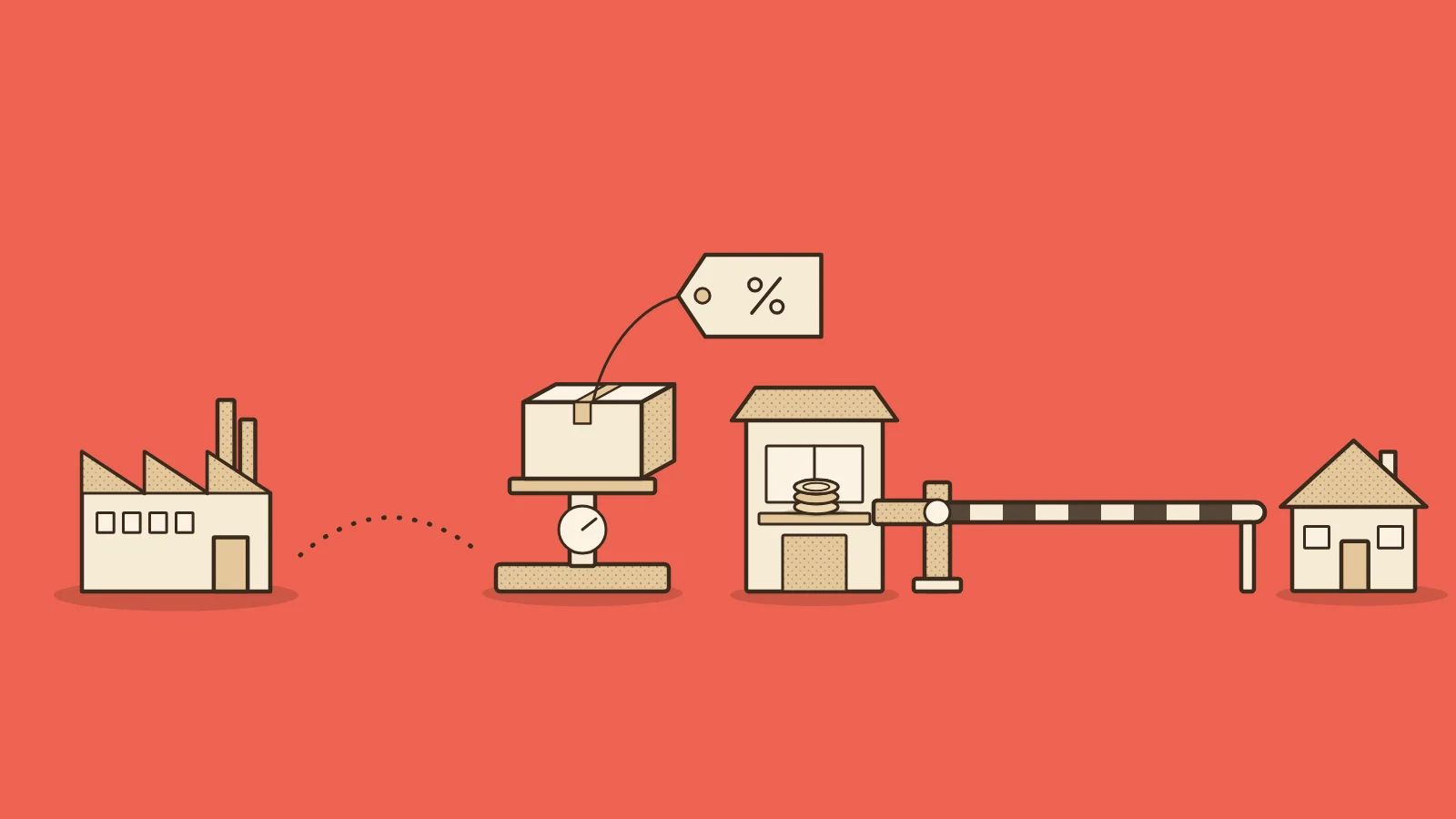
The $800 Section 321 exemption ended for every country on 29 August 2025, and a statute repeals it in July 2027. The timeline, the duty stack on Chinese goods, and what it changes for China-direct stores.
The Drop
Five winning products every week. Real margins, real factories, ready to import.