Where Is My Order? How to Cut WISMO Tickets During Black Friday
 By Bojan Dimov September 29, 2026 10 min read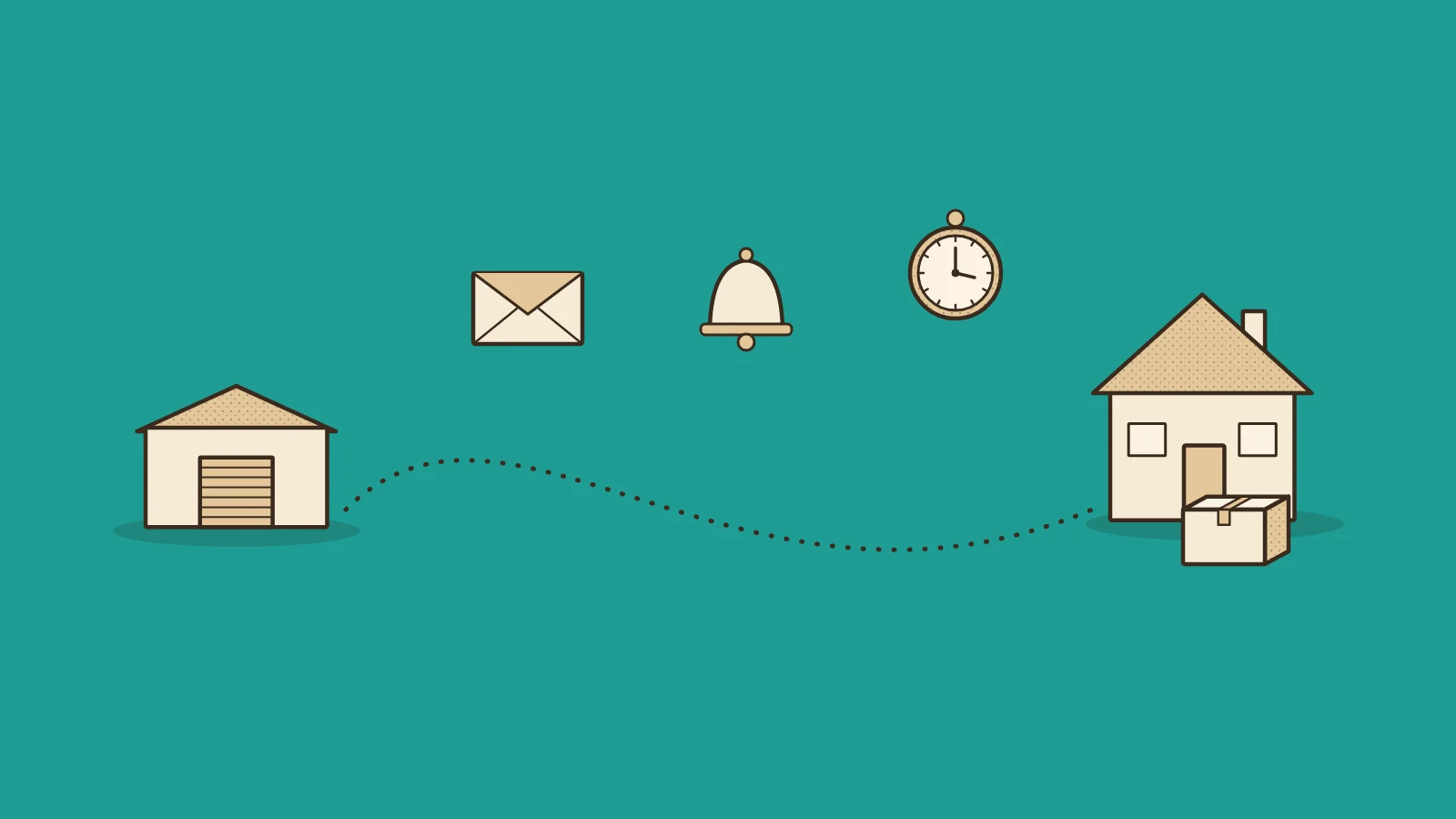
WISMO, short for "where is my order", is the most common question in ecommerce support: Gorgias found it made up 18% of incoming requests across its merchants in 2023. It spikes every Black Friday, and it is a symptom of silence. Most of those tickets are prevented by two things: an honest delivery window at checkout, and an update sent before the customer thinks to ask. Speed matters less than you would expect. In McKinsey's survey of US shoppers, about 85% said an order arriving within one or two days of the expected date is not unacceptably late. Below: the four moments customers worry, the messages that answer first, and what to do when a parcel is late.
Why WISMO spikes at peak
Four things happen at once in Black Friday week.
More orders. Shopify merchants sold $14.6 billion over Black Friday and Cyber Monday 2025, peaking at $5.1 million a minute. Even a small store sees a week of orders land in a weekend, and every one of them can become a question.
Longer transit. Carriers run at capacity from late November, which is why UPS, FedEx and USPS all price a peak season; see 2026 peak season surcharges. A parcel that takes five days in March can take eight in December.
More things going wrong. In Narvar's 2025 survey of 3,461 US shoppers, 74% had received at least one parcel later than its estimated date in the past year (Narvar, 6 November 2025). In its August 2026 survey, 23% said they had been told a package was delivered when it never arrived (Narvar, 24 August 2026).
Stores that go quiet. The team is busy shipping, so nobody sends updates. Silence is what turns a normal delay into a ticket.
The four moments customers start worrying
WISMO does not arrive at random. It clusters around four moments, and each one can be answered before the customer asks.
- Right after checkout. The customer has paid and wants reassurance. If the confirmation email does not say when the parcel will arrive, the question starts here.
- Label created, but not moving. Tracking shows "label created" or "information received" and then nothing for a day or two. For a parcel crossing borders this is normal, but the customer does not know that.
- The handoff to the local carrier. Cross-border parcels can go quiet while they fly and clear customs, then reappear under a local carrier's name. If nobody explained the handoff, the new carrier and the gap both look like problems.
- The estimated date passing. The single biggest trigger. Once the promised date has gone by, the customer writes, and some of them go straight to their bank.
Prevent it at checkout
The cheapest ticket to answer is the one that never gets sent, and it is prevented at checkout with an honest delivery window.
Narvar found that 73% of shoppers say an estimated delivery date influences their purchase decision, and 40% will not buy if no date is shown. Combine that with McKinsey's finding that most shoppers accept a parcel one or two days past the expected date, and the rule is clear: show a specific window per destination, and set it so you will usually beat it. A window you keep beats a fast promise you miss.
Practical steps:
- Show windows per country, in days. "4 to 8 days to the United States" is better than "7 to 15 days worldwide". Our windows are on each country page, for example shipping to the United States.
- Pad December. Carriers slow down in the last weeks before Christmas, so the slow end of your normal range is the realistic end.
- Publish your Christmas order-by date early. The working-backwards calendar for orders shipped from China is in the Q4 cutoff dates.
- Offer speed where it pays. If a faster service is available on a lane, offer it at checkout for customers who need it; the trade-off is in express vs standard shipping from China.
The Drop
Five winning products every week. Real margins, real factories, ready to import.



Updates that answer the question first
The goal of every message is to answer "where is my order" one step before the customer asks it. Six messages cover the journey.
| Message | When | What it must say |
|---|---|---|
| Order confirmed | At checkout | The delivery window, in dates, and that tracking will follow |
| Shipped | When the label exists | The tracking link, the carrier, and the window again |
| In transit to your country | When the parcel leaves the origin country | That tracking may pause while it flies and clears customs, and for how long |
| With your local carrier | At the handoff | The local carrier's name, so it is recognised |
| Out for delivery and delivered | On the day | Confirmation, plus where to look if it is not at the door |
| Delay notice | Before the estimated date passes | The new date and what you will do if it slips again |
The third message is the one most stores skip, and for cross-border parcels it prevents the most tickets. In Narvar's 2025 survey, 38% of shoppers said frequent tracking updates reduce their anxiety. Vendors that sell notification software report large effects: Narvar says proactive notifications deflect up to 60% of WISMO queries. Treat vendor numbers as a direction rather than a promise, but the direction is consistent.
Send the delay notice before the date passes, not after. A customer who hears about a delay from you is annoyed. A customer who discovers it alone is suspicious.
Tracking your customer can actually read
Tracking only helps if the customer can understand it. That means one page, the local carrier's name the customer recognises, and statuses in plain language.
Here is how ours works, as an example of what to look for in any fulfillment partner. Tracking pushes back into Shopify automatically, so the shipping notification comes from your store, with your logo and your wording.
The tracking page a customer lands on shows the last-mile journey in their own country; there is a setting to send your store only the local carrier's tracking number, explained in last-mile tracking only.
The public tracking page lets a customer paste up to 100 tracking numbers and see the status, a progress stepper and the full event feed, with automatic recognition across 55 carriers and 191 national postal services.
When a parcel is delivered, the status flows back into the platform automatically, so you are not checking it by hand. What your customer sees end to end is in what your customer sees.
Whoever ships your orders, check three things before Black Friday: tracking reaches your store automatically, the customer-facing page shows the local carrier, and delivered statuses come back without manual work.
When a parcel really is late
Some parcels will be late no matter what you do. What matters is the next 48 hours.
Reply first, with specifics. A short template that works:
Hi {first name}, thanks for checking in. Your order left the warehouse on {dispatch date} and is now with {local carrier} in {country}. Holiday volumes have slowed the final leg, and the current estimate is {new date}. Your tracking link: {link}. If it has not arrived by {new date plus two days}, reply here and we will send a replacement or a refund, whichever you prefer.
Decide refund or reship on value and timing. Before Christmas, a reship that cannot arrive in time is worth less than a refund. After Christmas, a reship is often what the customer wants. For low-value items, sending a replacement is usually cheaper than a long investigation. If tracking has stopped moving for several days, raise it with your fulfillment partner so a carrier claim can be opened.
Stop it becoming a chargeback. Under Visa's rules, a cardholder can dispute a non-delivered order up to 120 days after the expected delivery date, and a dispute costs you a fee even before you fight it. A customer who got a fast, specific reply rarely files one. The full per-order math is in chargeback math for slow shipping.
For what happens behind the tracking link during peak week, see Black Friday dropshipping, and for the season's numbers, Black Friday statistics 2026. How the fulfillment side runs is on China-direct 3PL fulfillment.
Want tracking that reaches your store without manual work? Connect your store, or see coverage for delivery windows by country.
Last reviewed 29 September 2026.
Frequently asked questions
What does WISMO mean?
WISMO stands for "where is my order", the customer question about a parcel's status and delivery date. It is the most common question in ecommerce support; Gorgias found it made up 18% of incoming requests across its merchants in 2023. WISMO tickets rise sharply in Black Friday week, when order volume jumps and transit times stretch.
How do I reduce "where is my order" emails?
Show a specific delivery window per destination at checkout, send the tracking link as soon as the parcel ships, explain in advance that cross-border tracking can pause during flights and customs, and send a delay notice before the estimated date passes. Make sure tracking reaches your store automatically and shows the local carrier your customer recognises.
Why do tracking numbers stop updating?
Usually because the parcel is between scans rather than lost. Cross-border parcels can show no movement while they fly and clear customs, and some local carriers only scan at their first depot. Tracking also slows in December when carriers run at capacity. If a parcel shows no movement for several days past its window, contact your fulfillment partner to investigate.
How should I tell customers about holiday shipping delays?
Early, specifically and before they ask. Publish your Christmas order-by date on your site, add a note to order confirmations that holiday transit times are longer, and if a parcel is delayed, email the new estimated date before the old one passes. Offer a clear next step, such as a replacement or refund if the new date slips.
What should I do when an order is late?
Reply within a day with the parcel's current location, the new estimated date and the tracking link, and say what you will do if that date passes. Decide between refund and reship on value and timing. For low-value items a reship is often cheaper than an investigation, and a fast reply prevents most chargebacks.
2026 Peak Season Surcharges: What UPS, FedEx and USPS Are Charging, and How to Price Around Them
UPS, FedEx and USPS peak surcharges run 27 September 2026 to 17 January 2027. The dates, the increases, and how to price shipping so they don't eat your margin.
Express vs Standard Shipping from China: When Paying for Speed Actually Pays Off
Express or standard shipping from China? See real transit times by lane, the true cost difference, and when paying for speed actually protects your margin.
3PL Fulfillment Pricing in 2026: China vs the United States vs Europe
Every 3PL bill is built from the same five components. What changes by region is the pricing model: published China rates near $0.99 per order, US surveys at $3.20 plus a storage meter, and Europe mostly quoting in private. All three priced from named sources, with the 2026 duty rules that changed the answer.
The Drop
Five winning products every week. Real margins, real factories, ready to import.