Black Friday Dropshipping 2026: What Actually Happens to Your Orders on the Busiest Days of the Year
 By Bojan Dimov September 29, 2026 13 min read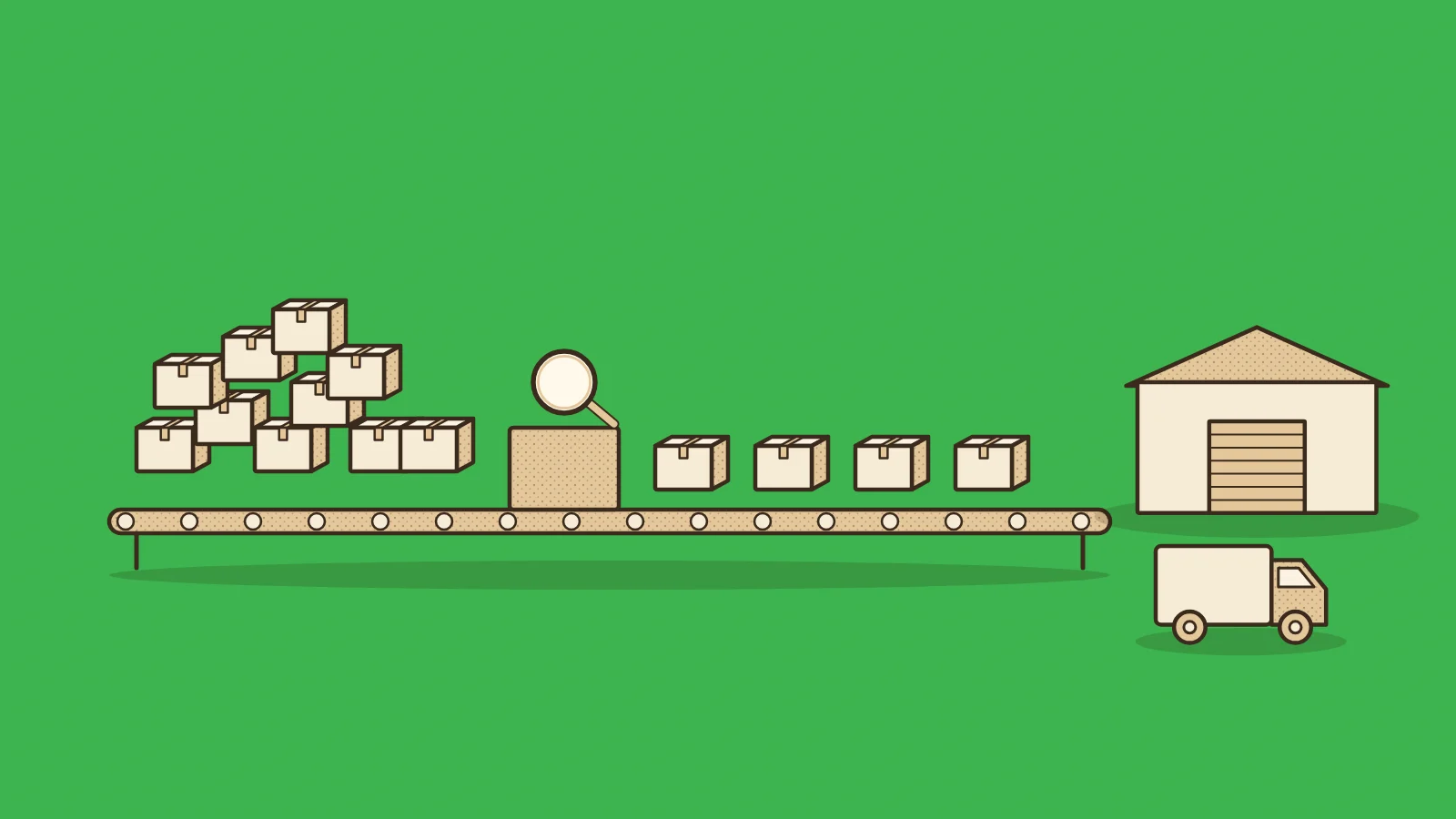
Black Friday dropshipping fails for one reason more than any other: orders arrive as a spike, not a stream, and the supply chain behind the store was never tested at that speed. Shopify merchants sold $14.6 billion over Black Friday and Cyber Monday 2025, peaking at $5.1 million a minute at 12:01pm Eastern on Black Friday. A week of normal orders can land in a few hours. The stores that come through peak cleanly are not the ones with the best ads. They are the ones that verified their supplier, their stock and their tracking in October. Below: one Black Friday order followed from checkout to doorstep, where each step breaks at peak, and what to verify first.
The shape of peak
Start with how concentrated the demand is. Shopify's figures for Black Friday Cyber Monday 2025 (Shopify, 2 December 2025):
| Metric | BFCM 2025 |
|---|---|
| Sales across Shopify merchants | $14.6 billion, up 27% (24% at constant currency) |
| Shoppers | More than 81 million |
| Peak minute | $5.1 million at 12:01pm Eastern on Black Friday |
| Average cart | $114.70 |
| Cross-border orders | 16% of all orders |
Adobe's US online figures tell the same story by day. In 2025, Black Friday brought $11.8 billion, Cyber Monday $14.25 billion and the whole Cyber Week $44.2 billion (Adobe, 2 December 2025). For 2026, Adobe forecasts Black Friday on 27 November at $12.9 billion, Cyber Monday on 30 November at $15.1 billion and Cyber Week at $47.5 billion (Adobe, 28 September 2026).
The point for a dropshipper is the shape, not the size. Your orders do not spread evenly across the week. They arrive in bursts around midnight launches, email drops and ad spikes, and every link behind the store has to absorb the burst on the same day. Note the cross-border line as well: one Shopify order in six crossed a border, which means one in six met customs, a line-haul and a foreign last-mile network during the busiest week of the year.
The journey of one Black Friday order
Here is what physically happens to a single order placed on Black Friday, step by step, as we see it from the warehouse side. At each step: what goes wrong at peak, and what a good operation does about it.
1. Checkout. Your customer pays, Shopify creates the order. What breaks: nothing on Shopify's side; the risk starts with what you promised at checkout. A delivery window you cannot keep in the busiest week becomes a support ticket later. What good looks like: an honest delivery window per destination, set before the weekend.
2. The order syncs to your fulfillment partner. The order leaves Shopify and lands in the fulfillment platform, ideally automatically. What breaks: stores whose fulfillment location is set wrong in Shopify, so orders never route; accounts that run out of prepaid balance, so orders cannot be paid for and shipped. What good looks like: orders routing automatically to the warehouse, and a balance topped up before the weekend if your account runs on one, as ours does.
3. Sourcing or pick. If the item is sourced per order, the unit is bought from the supplier; if you hold stock, it is picked from a shelf. What breaks: the winner sells out at the supplier on Saturday, and every order after that waits. What good looks like: stock on your top SKUs confirmed in writing in October, and held stock for the proven winners.
4. Quality check. The unit is checked against the approved sample before it is packed. What breaks: inspection is the step that gets skipped when volume triples, which is how defects turn into January refunds. What good looks like: the same inspection points in November as in March, with photo evidence you can see; our QC pass rate runs 99.6%, and how a photo check works shows the process.
5. Pack. Box, inserts, label. What breaks: wrong items and wrong variants when packers rush, plus packaging that has not been reordered for peak. What good looks like: orders processed individually rather than in batches, and packaging stock for peak checked in October.
6. Dispatch. The parcel leaves the warehouse. Our dispatch runs in under 24 hours on average, and that is an average across the year, not a promise about the busiest 96 hours. What breaks: backlogs that build on Friday and clear on Tuesday. What good looks like: a dispatch commitment in writing, and order cutoffs set with a buffer.
7. Line-haul. The parcel flies to the destination country. What breaks: air capacity is tight at peak; WorldACD put Asia Pacific to US spot rates about 40% above last year in late September. What good looks like: capacity planned before November, not bought on the day.
8. Customs. The parcel clears import. What breaks: low-value parcels to the US now pay duty in every channel, and EU parcels pay a €3 duty per type of product inside, so undervalued or misdeclared goods get held. What good looks like: accurate declarations and duty priced into the product; the September changes are summarised in how brands are preparing for Q4 2026.
9. Local last mile. The parcel moves to the local carrier your customer knows. What breaks: carrier networks at their limit, with peak surcharges; see 2026 peak season surcharges. What good looks like: delivery windows that already assume a slower network in December.
10. Tracking. Your customer checks where the parcel is. What breaks: tracking numbers that upload to Shopify days late, so the customer sees nothing and emails you, or files a dispute. What good looks like: tracking pushed back to the store automatically, with the option to show only the local carrier's number; see cutting WISMO tickets at Black Friday.
11. Delivered. The parcel arrives and the delivered status flows back into the platform automatically, which closes the loop on disputes and support tickets.
Eleven steps, three countries, and at least four companies. A peak-ready operation is not one that never has problems. It is one where each step is automated, checked and visible, so a problem at step 3 is caught before it becomes a chargeback at step 10.
The Drop
Five winning products every week. Real margins, real factories, ready to import.
Where dropshipping breaks at peak
Look back over the journey and five failures account for most of the damage.
- Winners go out of stock at the supplier. The product that took off on Friday is gone by Sunday, and nobody told the store.
- Agents stop answering. A single-person agent with fifty clients cannot reply to all of them during the busiest week. The patterns to watch for are in dropshipping agent red flags.
- QC is skipped under volume. Defects ship because inspection was the easiest step to cut.
- Tracking uploads late. The customer sees no movement and assumes the worst. In the Merchant Risk Council's 2026 survey, 52% of merchants cited false "not received" claims as a form of refund abuse, and a parcel with no tracking makes those claims easy to file and hard to fight. The per-order cost of losing one is in chargeback math for slow shipping.
- Carrier capacity tightens. Transit times stretch in December, and a promise made in October no longer holds.
None of these is exotic. They are the predictable result of volume meeting a chain that was only tested at normal speed.
What to verify before you trust a supplier with peak volume
Ask these six questions in October, and get the answers in writing. A supplier who cannot answer them in October will not answer them in November.
- A written dispatch commitment. How many hours or days from order to dispatch, and what happens when they miss it. "Fast" is not a number.
- Stock confirmed on your top SKUs. Quantities available for your best sellers through December, and what happens when they run out.
- QC evidence under volume, not just on samples. Photos from a normal production run, and a clear answer on whether inspection continues in peak week.
- When tracking uploads. Same day as the label, or days later? Tracking that reaches the store late is the root of most "where is my order" emails.
- Who answers during peak, and how. A named channel and a response time, not a personal chat account.
- The order cutoff dates. The last order date for delivery before Christmas, per destination.
The full verification process, including how to check that a supplier actually runs a warehouse, is in how to verify a dropshipping agent.
Run a peak rehearsal in October
The only way to know how your chain behaves at peak is to push real orders through it before peak. A rehearsal takes an afternoon and a few test orders, and it catches most of the failures above while there is still time to fix them.
- Place real test orders. Ten to twenty orders across your top SKUs and your main destination countries, paid like a customer would pay.
- Time every step. When did the order reach the fulfillment platform, when did it dispatch, and when did tracking appear in Shopify? Write the hours down.
- Look at tracking as your customer would. Open the tracking link on a phone. Is the carrier name one your customer recognises, and does the status make sense without explanation?
- Ask a "where is my order" question. Send your own support channel the question a worried customer would ask, and time the answer.
- Check the boring settings. Fulfillment location in Shopify, the account balance if you use one, payment methods, and shipping rates at checkout.
- Test a stockout. Ask your supplier what happens to orders for your best seller if it sells out on Saturday, and what they will tell you.
Anything that took longer than you promised customers, or anything you could not see, is what breaks on Black Friday. Fix it in October, then re-run the rehearsal in the first week of November.
Per-order or stock your winners
Per-order fulfillment follows demand without prepaying stock; held stock protects your winners from a supplier sellout. Most stores that come through Q4 well use both: per-order for the long tail, held stock for the two or three products that are clearly working. The cash-flow side of that trade is in dropshipping cash flow, and the dates by which each decision must be made are in the Q4 cutoff calendar.
How we run peak
Our numbers are published, and they are averages: dispatch in under 24 hours on average from our Shenzhen warehouse, a 99.6% QC pass rate, 99.8% delivery accuracy, and an average of 6.6 days for dispatch plus transit on Tier-1 lanes. Orders route to the warehouse automatically from Shopify, tracking pushes back to the store automatically, and the delivered status flows back into the platform without anyone chasing it. Support runs through the dashboard, email and WhatsApp.
Averages are not peak-week promises, and we would rather you plan with a buffer than discover the difference on 20 December. Set your cutoffs early, keep the balance funded over the weekend if you use one, and confirm stock on your winners before November. How the per-order model works end to end is on dropshipping fulfillment and China-direct 3PL fulfillment.
The January side of the season, returns, is covered in holiday returns 2026, and the season's numbers in one place are in Black Friday statistics 2026.
Want your Black Friday orders on a chain you have tested? Connect your store and run live orders through it in October, or get a sourcing quote for the products you plan to push.
Last reviewed 29 September 2026.
Frequently asked questions
Is dropshipping good for Black Friday?
It can be, if the supply chain behind the store has been tested at peak speed. Demand is enormous: Shopify merchants sold $14.6 billion over BFCM 2025. The risk is concentration, because orders arrive in bursts that expose supplier stockouts, skipped quality checks and late tracking. Stores that verify their supplier, stock and tracking in October do well.
How do I prepare my dropshipping store for Black Friday?
In October, confirm stock on your top products in writing, get a written dispatch commitment, check that tracking uploads to Shopify automatically, set honest delivery windows per destination, reprice shipping for carrier surcharges, and plan an offer that protects margin. Test the whole chain with live orders before November, not during Black Friday week.
Can dropshipping suppliers handle Black Friday volume?
Some can and many cannot. The difference shows in stock depth on popular products, whether quality checks continue under volume, how fast tracking uploads, and whether anyone answers during peak week. Ask for written answers on dispatch time, stock, inspection and cutoffs in October. A supplier that cannot answer then will not answer in November.
When should I stop taking orders for Christmas delivery?
It depends on where your parcels start. For orders shipped from China, 10 December is the order-by date we would publish for most destinations, with 13 December as the arithmetic edge. For US domestic parcels, USPS recommends shipping by 17 December for Ground Advantage and 18 December for Priority Mail in the lower 48 states.
What happens if my supplier runs out of stock on Black Friday?
Orders for that product stop moving, and every hour of silence becomes a support ticket or a refund. Prevent it by confirming stock on your top SKUs before November and holding stock on proven winners. If it happens anyway, tell customers the new date straight away and offer a switch or a refund before they have to ask.
How long does dropshipping take during the holidays?
Longer than the rest of the year, because carriers run at capacity. From China, plan on dispatch plus transit times at the slow end of the normal range for each destination, and publish delivery windows that already include December slowdowns. Our average for dispatch plus transit on Tier-1 lanes is 6.6 days, but plan peak orders with a buffer.
Black Friday Discount Math: How to Run an Offer Without Losing Money on Every Order
A 30% Black Friday discount doesn't cut your shipping cost. The per-order math, why bundles beat percentage off, and how to price your 2026 offer.
Best Dropshipping Agents in 2026: An Honest Comparison From Inside the Industry
Nine agents and platforms scored against six checks that predict whether a supplier holds up at scale, using only what each company publishes on its own site. Peregrine is one of the nine, scored by the same rules, including the check where it falls short.
Dropshipping vs DTC Brand: Which Should You Start in 2026 (and How Each Works From China)
Dropshipping versus private label is usually framed as a choice. It is really a sequence: test demand per order with almost no capital, then brand the winners on the same rails. Real startup costs, published margins, and the graduation path, side by side.
The Drop
Five winning products every week. Real margins, real factories, ready to import.