
Count sets, packs and loose pieces correctly
Express every inbound and order in the unit your customer buys, then list the components needed to make one complete unit.
On this page
Use with AI
A sale unit is what one quantity on the store order buys. It might be a single item, a pair or a kit. The number of physical pieces in a supplier carton can be much higher.
Start an inbound for the owning store, expand its stocked product and enter only the units in this shipment.
Read transcript
- Open Create inbound and select the store this stock belongs to.
- Continue to Products & quantities and open the stocked product.
- Enter the number you are sending beside the exact variant SKU.
- The other variants stay empty. Continue when the quantities match your packing list.
- One sale unit
Each customer buys one base plus two clips.
- Limiting piece
Eighteen clips can supply nine kits, even though ten bases arrived.
- Record the remainder
Count nine complete kits and one loose base. Two more clips would complete the last kit.
Translate the packing list into sale units
For a three-piece kit containing one base and two clips, ten complete kits require ten bases and twenty clips. If the carton contains ten bases and eighteen clips, it can make nine complete kits. Keep the extra base separate in the count until the missing pieces arrive.
- Write the contents of one store SKU using component names and counts. Identify whether the customer buys a single shoe, a pair, one curtain panel or a set of panels.
- Ask the factory to state the number of complete sellable units per SKU in each carton. For loose components, include a separate component count.
- Provide a photo of one complete pack and agree how to identify short or damaged sets. In Inventory → Create inbound → Products & quantities, expand the kit product. Enter the number of complete kits in Quantity to add beside the kit SKU. If the warehouse receives loose components under their own SKUs, confirm that setup with receiving and enter each component against its agreed SKU.
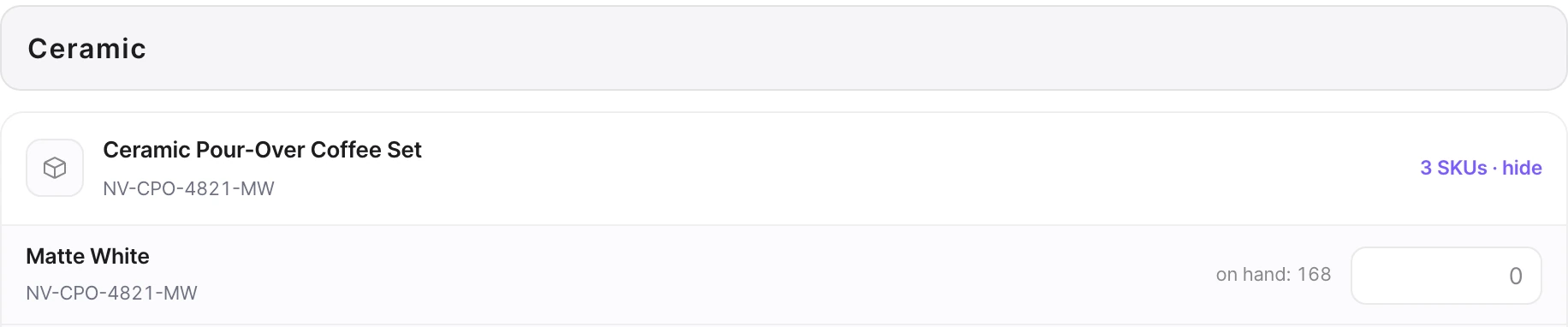
In the receiving form, put the complete kits on their own SKU line. On hand is the quantity already recorded.
Platform screenshot · Example dataView full size
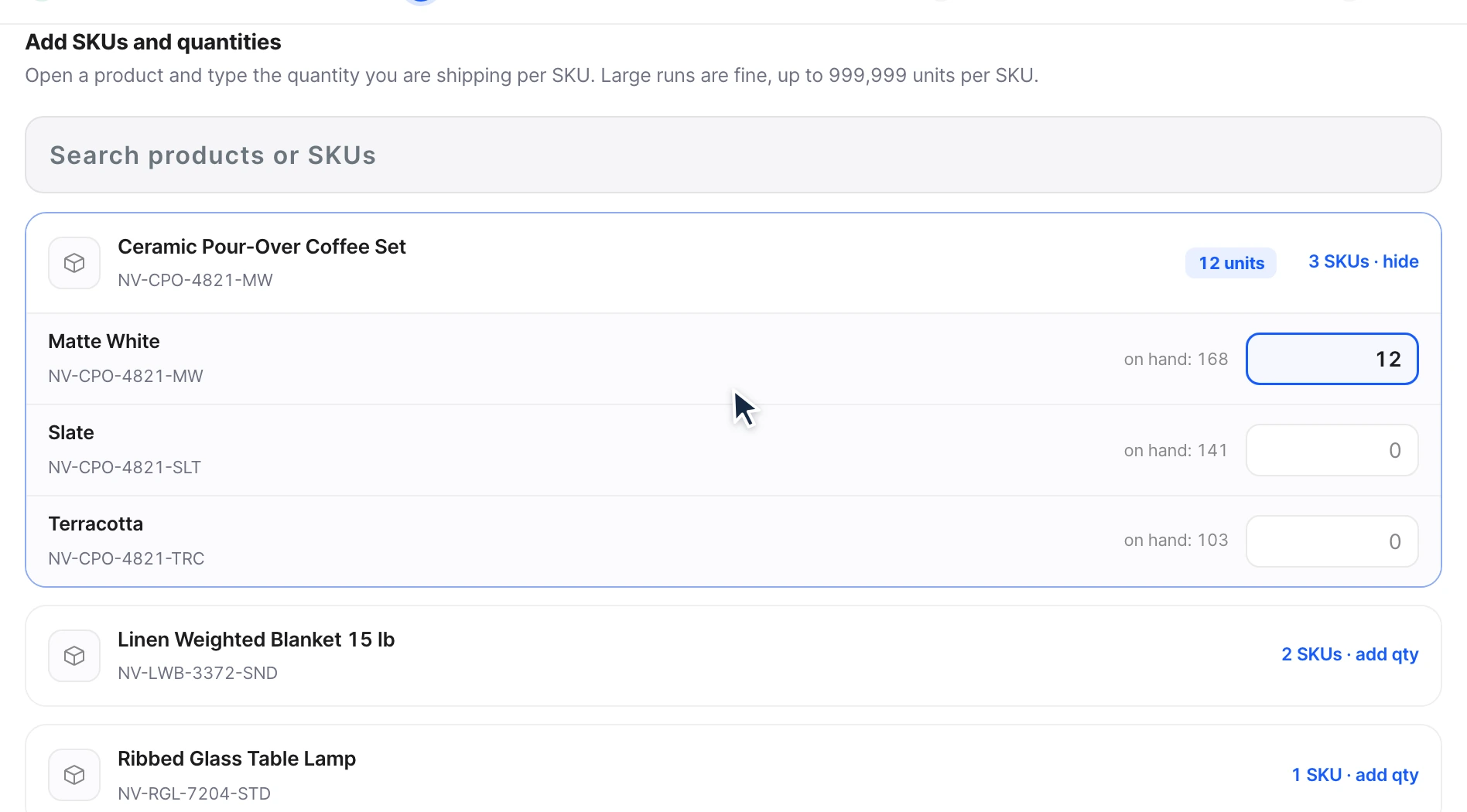
Enter the number of sale units beside the exact SKU. If the SKU represents a full set, count complete sets on this line.
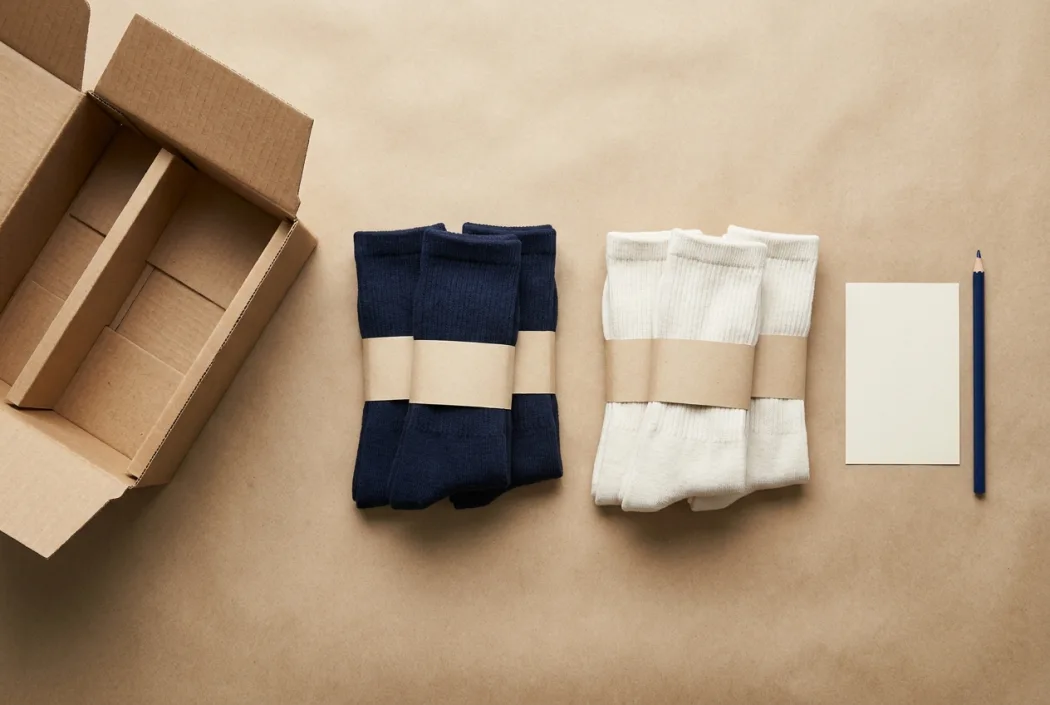
Illustration. Separate the colors, confirm whether one sale unit is a pair, pack or piece, then record the actual count for each SKU.
Common questions
The customer ordered a quantity of two. Does that mean two pieces?
Read the SKU definition. Two three-piece kits contain six pieces. Two single panels contain two panels.
What if a gift is included only with some kits?
Document the qualifying order rule separately from the base kit contents. Otherwise receiving or packing may treat the gift as a missing part for every kit.
How should I report a set that reached the customer incomplete?
Give support the order reference, the SKU, the promised components and a photo of everything that arrived alongside its packaging label.