
Calculate the cost per sellable unit for stock you own
Allocate a factory batch and its inbound costs, then add the outbound cost for one customer order without purchasing the goods twice.
On this page
Use with AI
For a stocked DTC product, your business has already incurred a goods cost when it bought the batch. The Peregrine wallet and your internal margin sheet answer different questions. One records fulfillment transactions. The other also needs the factory cost of the stock you sell.
- Inbound batch
Record the factory invoice and agreed batch-level delivery or preparation costs.
- Sellable units
Verify the exact quantities accepted and their condition before using that denominator.
- Customer parcel
Add the applicable outbound packing and freight to the cost of the units in the order.
Make a batch calculation
Use your actual receipts and a consistent allocation basis. In this simple illustrative planning example, a brand pays $480 for 60 identical units and $60 for inbound freight. If all 60 are accepted as sellable, the planning cost is ($480 + $60) ÷ 60 = $9.00 per unit. A mixed batch of products with different unit values or freight requirements needs a defensible split by SKU.
If only 58 units are currently confirmed, investigate the other two. They may be on a second carton, under inspection or missing. Keep the discrepancy open before deciding how to allocate a loss or supplier credit. Use your own accounting policy for the books.
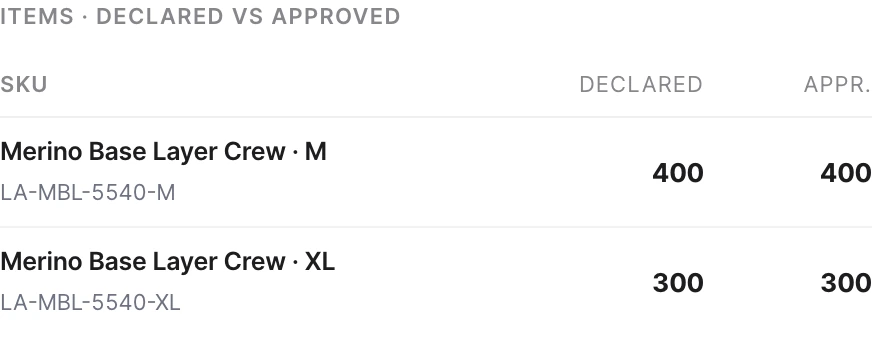
Compare Declared and the approved quantity on each variant line before dividing batch cost across sellable units.
Price the outbound order separately
For a one-unit sale, start with the confirmed acquisition cost for that SKU. Add the applicable packing, approved insert, outbound shipping and any other confirmed charges once. For a two-unit order, use two units of goods and the actual parcel configuration. Confirm which charges are included in the shipping quote and what the wallet will cover.
Compare the first posted order charges with the agreed stocked arrangement. If a goods purchase appears for inventory you supplied and already paid for, send the SKU, inbound reference and specific charge for review before treating it as a second normal cost.

Compare delivery estimates for the finished customer parcel separately from your unit purchase cost. The two shown prices are fictional.
Common questions
Where does my factory invoice appear in Peregrine?
An invoice you paid your own manufacturer is part of your purchasing records. Use the inbound and SKU to connect that cost to the physical stock you received.
Can I divide the entire factory order by total pieces across different products?
Only if that basis produces meaningful costs for your products. A heavy kit and a single replacement strap can carry very different goods and freight costs. Separate their purchasing lines.
What if the warehouse packs two units in a new gift box?
Use two units of goods and the approved pack’s actual quoted price and dimensions. Confirm whether that change alters the outbound shipping service or cost.